



Executive read
Acquisition platforms grow geographically while expanding service mix. Without separating medical and cosmetic journeys, location-level CAC and revenue comparisons become misleading.
Four lenses translate the public evidence into the questions a category marketer needs to answer: how demand is created, where conversion happens, where measurement breaks, and what to change.
One clinic can run two economies
Insurance-led medical care and cash-pay cosmetic services share locations but use different offers, margins, and decision paths.
A consultation is not one universal outcome
Medical appointments, cosmetic consults, procedures, and repeat treatment should not be collapsed into one lead metric.
Service line disappears inside blended CAC
Location-only reporting can make high-value cosmetic demand and payer-constrained medical demand look comparable when they are not.
Tag service line beside location
Keep medical versus cosmetic intent, procedure type, payer context, and clinic capacity in the same governed model.
Category evidence
Four findings worth carrying into the operating model
Forefront and QualDerm show why medical, surgical, and cosmetic dermatology must retain service-line and payer context inside one clinic estate. Counts below keep their original unit and date; no parent/child brands, stores, clinics, laboratories, beds, or partner sites are silently added together.
One clinic can run insured and cash-pay economies
Medical referral and symptom search lead toward insured care; social, offers, and paid search can lead toward a cosmetic consult and repeat treatment.
Claim, finder, practice, and clinician counts diverge
Forefront reports 280+ locations while its live finder returned 274 results. QualDerm reported 161 practices and 397 clinicians in its current directory.
A national platform can retain many patient brands
QualDerm routes patients across dozens of affiliate domains, making consumer brand and provider identity as important as parent ownership.
Blended CAC erases the service line
A medical visit, biopsy, Mohs procedure, cosmetic consultation, package, and repeat treatment have different capacity, margin, and payer logic.
Measurement path
The useful outcome sits beyond the lead
Dermatology sits between Dental and Med Spa: regulated insured medical care and discretionary cash-pay aesthetics can share the same clinic and media account, but not one CAC.
- 01 referral, symptom search, social, or offer
- 02 insurance, provider, service, and location choice
- 03 kept medical appointment or cosmetic consult
- 04 diagnostic, procedure, or treatment plan
- 05 payment or payer adjudication
- 06 repeat treatment or follow-up
location × service line × provider × payer × date
kept visit or completed procedure with service-line economics
- kept-visit CAC
- consult-to-procedure
- payer mix
- provider capacity
- repeat-treatment margin
Creative evidence
The category becomes legible when the real work is visible
These attributed first-party examples show how operators frame need, trust, access, and outcomes. They are editorial evidence, not a performance ranking.
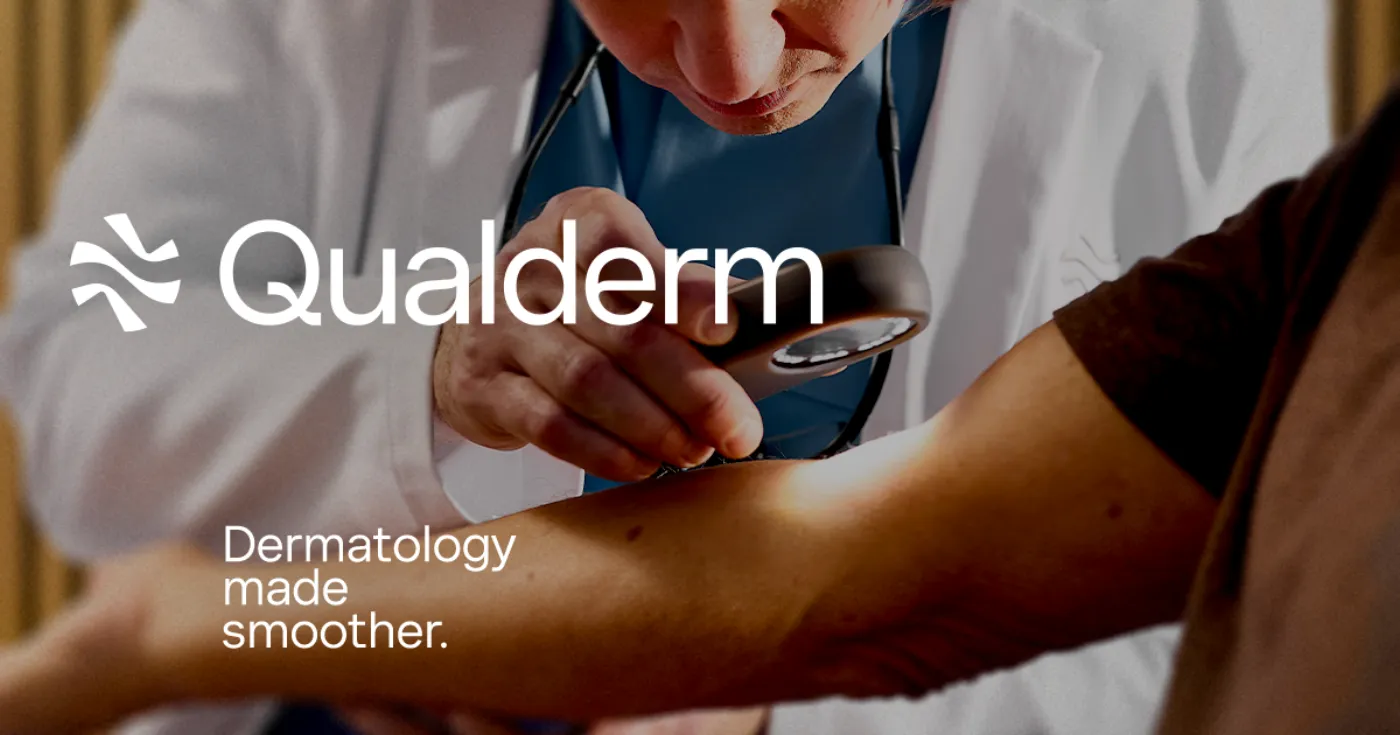
“Dermatology made smoother” turns an operating model into a patient promise
The brand compresses access, consistency, and experience into one line instead of exposing the complexity of a multi-brand platform.
The patient outcome is emotional before it is procedural
A real care environment and an expressive patient keep the network story human while the operating platform remains invisible.
National reach is framed through a local clinician relationship
The image reconciles the category tension: scale belongs to the platform, but trust is still created by one clinician in one clinic.
3 of 3 examples shown
AI adoption
Nine workflows: what AI changes, and what it still cannot fix
Dermatology has specialty AI in patient access and practice operations, but acquisition measurement must keep insured medical care, referrals, surgery, and cash-pay cosmetics separate by provider, location, and outcome.
Dermatology-specific vendor capabilities, selected operator cases, and observed public-site technologies show availability or use only at the stated scope. A loaded vendor tag does not prove its AI module is enabled, and no category adoption rate is inferred.
Creative production
Rare Maturity basis · Cross-industry proxyGoogle and Meta can generate or adapt ad assets, but no dermatology-group deployment of their generative creative features was verified.
Still manual / non-AIClinicians and marketers still own evidence, claims, credentials, before-and-after consent, disclosures, local applicability, and approval.
Meta documents AI text, image, video, audio, and placement variation; dermatology utilization is not disclosed. Accessed Aug. 4, 2026.
Patient imagery, medical claims, physician credentials, and cosmetic advertising rules constrain unsupervised generation.
Message and copy generation
Emerging Maturity basis · Verified industry evidenceDermatology software uses AI to identify overdue, cancelled, no-show, and lapsed patients and initiate tailored re-engagement campaigns.
Still manual / non-AIMedical education, cosmetic offers, treatment claims, patient-specific advice, and final campaign language remain reviewed by people.
ModMed documents AI cohort identification and tailored text or email outreach for specialty practices; accessed Aug. 4, 2026.
Medical PHI and clinical advice cannot be mixed casually with promotional copy or cosmetic segmentation.
Paid-media optimization
Widespread Maturity basis · Cross-industry proxyGoogle and Meta automate bidding, audiences, placements, and creative delivery for practices that advertise on their platforms.
Still manual / non-AIGroups still define provider capacity, payer and service mix, cosmetic margin, geography, exclusions, and the outcome returned to bidding.
Google documents AI across campaign optimization; public dermatology-platform use does not prove a specific group enabled it. Accessed Aug. 4, 2026.
One lead metric blends insured medical visits, referrals, Mohs pathways, cosmetic consultations, and procedures with different value and capacity.
SEO and GEO
Rare Maturity basis · Cross-industry proxySearch engines use AI to assemble answers, but no direct dermatology-group GEO operating system was verified.
Still manual / non-AIClinician review, condition and procedure content, provider credentials, location facts, schema, reputation, and local differentiation remain manual.
Google says ordinary people-first SEO and accurate structured data remain the route into AI Overviews and AI Mode; accessed Aug. 4, 2026.
Health-answer accuracy, credential claims, provider movement, and duplicated local entities make scaled generation high risk.
UTM, attribution, and data QA
Emerging Maturity basis · Operator exampleAI call-intelligence platforms can classify appointment intent and connect calls to campaigns; QualDerm publicly exposes Invoca across brand sites, but AI-module use is unverified.
Still manual / non-AITeams still map brand, domain, location, provider, service, payer, call, appointment, procedure, and revenue across systems.
Primary-site inspection found Invoca across QualDerm affiliate brands on Aug. 4, 2026; presence is not proof of Conversation Intelligence adoption.
Many brands and analytics properties use incompatible identities, while medical and cosmetic conversions have different outcome definitions.
Call analysis
Emerging Maturity basis · Operator exampleHealthcare call AI can identify appointment intent and booking outcomes; QualDerm uses Invoca tags, but public evidence does not identify enabled AI features.
Still manual / non-AIStaff still review clinical calls, recording consent, routing errors, booking disposition, patient identity, and the final care outcome.
Invoca's Nemours case documents AI appointment and booking classification; accessed Aug. 4, 2026. It is a healthcare proxy for the observed QualDerm stack.
PHI, recording laws, clinical urgency, and the missing join from call to kept visit or procedure constrain automated action.
Lead routing and CRM
Emerging Maturity basis · Verified industry evidenceDermatology-specific software can auto-route patient messages by clinical intent and categorize inbound workflow items for the right team.
Still manual / non-AIReferral priority, insurance and provider fit, duplicate patients, clinical urgency, cosmetic qualification, and exception ownership remain human-governed.
ModMed documents intent-based message routing within its dermatology platform; accessed Aug. 4, 2026.
A routing error can delay care when provider scope, payer acceptance, referral status, and urgency are not modeled accurately.
Scheduling and patient engagement
Emerging Maturity basis · Verified industry evidenceDermatology platforms use AI to identify patients for rebooking and retention, while digital scheduling and messaging reduce front-office phone work.
Still manual / non-AIWaitlists, visit-type eligibility, provider matching, referrals, cancellations, procedure sequencing, and clinical exceptions still require staff rules.
The operator case documents ModMed and Klara scheduling and messaging automation; June 11, 2024. It does not prove use of every current AI module.
Long waitlists and mixed medical, surgical, and cosmetic services require precise eligibility and provider-capacity rules.
Compliance and privacy
Rare Maturity basis · Verified industry evidenceAI can assist with redaction and policy checks, but the dermatology evidence base emphasizes risks rather than autonomous compliance adoption.
Still manual / non-AIBAAs, patient consent, PHI use, before-and-after permissions, truth-in-advertising, vendor review, and accountability remain human decisions.
AAD's 2026 program identifies hallucinations, privacy, informed consent, bias, and medical-legal accountability; July 18, 2026.
Models may receive PHI, patient imagery, or clinical context without appropriate consent, contracts, retention, and review controls.
Operator map
Where dermatology operators sit
Highlighted companies have enough dated public evidence for both directional scores. The full cohort stays in the background for market context.
Where public demand intensity meets marketing-operations centralization
Directional scores synthesize dated public ad-library, website, tag-layer, and operating-model evidence. They are not spend, revenue, or vendor-performance scores, and not published rubric composites; positions are directional synthesis.
- Aspen Dental: paid demand 70 out of 100; marketing operations centralization 88 out of 100.
- Heartland Dental: paid demand 45 out of 100; marketing operations centralization 22 out of 100.
- PDS Health: paid demand 72 out of 100; marketing operations centralization 92 out of 100.
- SALT Dental Partners: paid demand 22 out of 100; marketing operations centralization 15 out of 100.
- Smile Brands: paid demand 68 out of 100; marketing operations centralization 20 out of 100.
- Smile Doctors: paid demand 72 out of 100; marketing operations centralization 62 out of 100.
- Sonrava Health: paid demand 68 out of 100; marketing operations centralization 34 out of 100.
- Forefront Dermatology: paid demand 26 out of 100; marketing operations centralization 86 out of 100.
- QualDerm Partners: paid demand 30 out of 100; marketing operations centralization 58 out of 100.
- US Fertility: paid demand 55 out of 100; marketing operations centralization 16 out of 100.
- LaserAway: paid demand 78 out of 100; marketing operations centralization 70 out of 100.
- Milan Laser: paid demand 90 out of 100; marketing operations centralization 74 out of 100.
- SEV Laser: paid demand 82 out of 100; marketing operations centralization 72 out of 100.
- 4Ever Young: paid demand 76 out of 100; marketing operations centralization 55 out of 100.
- SkinSpirit: paid demand 68 out of 100; marketing operations centralization 84 out of 100.
- VIO Med Spa: paid demand 72 out of 100; marketing operations centralization 55 out of 100.
- OVME: paid demand 63 out of 100; marketing operations centralization 80 out of 100.
- Ever/Body: paid demand 55 out of 100; marketing operations centralization 78 out of 100.
- Beltone: paid demand 30 out of 100; marketing operations centralization 12 out of 100.
- HearingLife: paid demand 30 out of 100; marketing operations centralization 84 out of 100.
- Miracle-Ear: paid demand 40 out of 100; marketing operations centralization 45 out of 100.
- The Joint: paid demand 84 out of 100; marketing operations centralization 52 out of 100.
- ATI Physical Therapy: paid demand 30 out of 100; marketing operations centralization 70 out of 100.
- NovaCare: paid demand 10 out of 100; marketing operations centralization 74 out of 100.
- Select Physical Therapy: paid demand 12 out of 100; marketing operations centralization 66 out of 100.
- U.S. Physical Therapy: paid demand 10 out of 100; marketing operations centralization 12 out of 100.
- Upstream Rehabilitation: paid demand 14 out of 100; marketing operations centralization 38 out of 100.
- American Family Care: paid demand 62 out of 100; marketing operations centralization 15 out of 100.
- CityMD: paid demand 40 out of 100; marketing operations centralization 80 out of 100.
- Concentra: paid demand 6 out of 100; marketing operations centralization 72 out of 100.
- USA Vein Clinics: paid demand 64 out of 100; marketing operations centralization 84 out of 100.
- Banfield: paid demand 52 out of 100; marketing operations centralization 76 out of 100.
- Thrive Pet Healthcare: paid demand 58 out of 100; marketing operations centralization 30 out of 100.
- VCA Animal Hospitals: paid demand 50 out of 100; marketing operations centralization 72 out of 100.
- VetCor: paid demand 18 out of 100; marketing operations centralization 38 out of 100.
- MyEyeDr: paid demand 85 out of 100; marketing operations centralization 85 out of 100.
- National Vision: paid demand 45 out of 100; marketing operations centralization 68 out of 100.
Footprints
Largest known operator footprints
Location counts come from the dated research registry and first-party public directories. They are shown to explain operating scale, not to rank quality or performance.
Implications
The measurement design follows the operating model
Model location explicitly
Media, calls, forms, appointments, and revenue need one durable facility identifier.
Separate collection from activation
Privacy-safe collection does not by itself create a governed reporting or activation layer.
Preserve local context
National rollups stay useful only when teams can drill into brand, market, service, and location.
This section describes data-design implications from the research. It is not a claim that every operator has the same stack, privacy obligations, or level of centralization.
Method
A dated public-source edition
The segment inherits the parent report method: location directories, sitemaps, booking paths, public web tags, ad transparency libraries, ownership announcements, and public operating-model evidence.
Private CRM history, sales calls, contacts, customer data, internal scoring, and recommendations are excluded. Technology detection means a signal was visible on a reviewed surface; it does not prove enterprise-wide deployment.
- Finder results and location claims can use different inclusion rules.
- Detected measurement IDs are public implementation signals, not proof of active properties.
- The two complete audits do not support an industry-wide adoption rate.
4 primary sources in this category synthesis
- Forefront Dermatology First-party 280+ location and service-line evidence; accessed August 4, 2026. ↗
- QualDerm Partners First-party practice, clinician, affiliate, and positioning evidence; accessed August 4, 2026. ↗
- Advanced Dermatology First-party medical and cosmetic model and 150+ locations; accessed August 4, 2026. ↗
- U.S. Dermatology Partners First-party multi-state medical, surgical, and cosmetic context; accessed August 4, 2026. ↗