



Executive read
The public evidence supports a guarded operating blueprint, not a category-wide performance benchmark. Physical clinics, telehealth, approved products, and compounded routes require separate denominators.
Four lenses translate the public evidence into the questions a category marketer needs to answer: how demand is created, where conversion happens, where measurement breaks, and what to change.
A quiz is only pre-qualification
Search, social, education, financing, and location discovery lead into clinical eligibility rather than directly to a sale.
Started therapy is the first useful outcome
Consult, labs, prescription, fill, first dose, titration, and refill are distinct events with different failure modes.
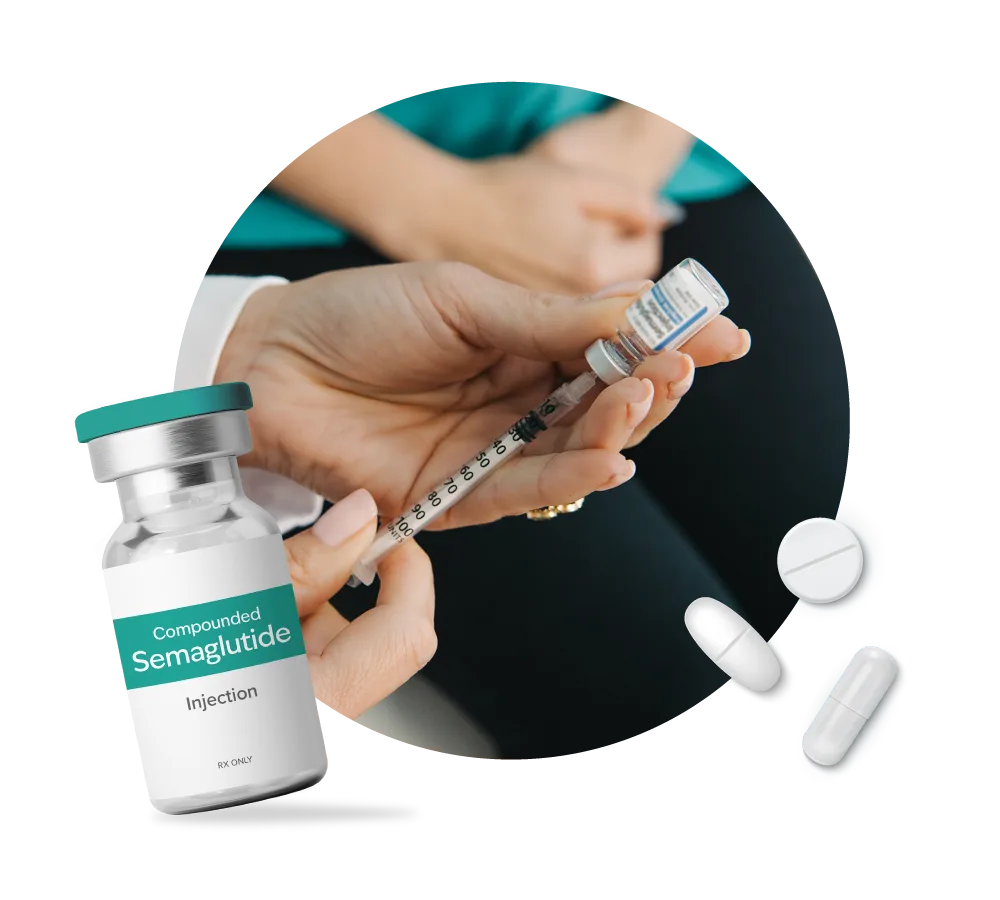
Product route changes the economics
Approved, payer-covered, cash, telehealth, and compounded paths cannot be blended into one CAC or margin.
Join claims to durable care
Carry campaign and claim version through eligibility, prescription, fill, start, adherence, margin, and discontinuation.
Category evidence
Four findings worth carrying into the operating model
Current clinic directories and FDA sources support a bounded journey and claim-governance model. They do not support a category-wide CPL, ROAS, or treatment benchmark. Counts below keep their original unit and date; no parent/child brands, stores, clinics, laboratories, beds, or partner sites are silently added together.
Physical clinics and telehealth need separate cohorts
The current foundation counts 139 Medi-Weightloss, 47 Lindora, and 28 Options clinic pages. It does not add telehealth coverage to physical clinic counts.
A lead or quiz is only pre-qualification
Eligibility, labs, insurance or cash approval, prescription, fill, first dose, titration, adherence, refill, and discontinuation sit between interest and durable care.
Approved and compounded pathways cannot be blended
Medication source, pharmacy relationship, payer route, supply, and clinical supervision change both economics and claim risk.
Creative claims are an operating control
FDA enforcement against misleading compounded GLP-1 promotion makes claim version, evidence, geography, and treatment route necessary campaign fields.
Measurement path
The useful outcome sits beyond the lead
Marketing is coupled to clinical eligibility, pharmacy, product route, supply, claim substantiation, adherence, and discontinuation. A form submit is especially far from value.
- 01 lead, education, or quiz
- 02 clinical eligibility
- 03 labs and insurance or cash approval
- 04 visit and prescription
- 05 fill and treatment start
- 06 titration and adherence
- 07 refill, outcome, or discontinuation
clinic/model × treatment route × claim version × payer × cohort month
clinically appropriate treatment start and retained care
- eligible-lead rate
- Rx-to-fill
- first-dose rate
- CAC per started patient
- 30/90/180-day retention
Creative evidence
The category becomes legible when the real work is visible
These attributed first-party examples show how operators frame need, trust, access, and outcomes. They are editorial evidence, not a performance ranking.
The provider relationship distinguishes clinical care from a product ad
The consultation image makes eligibility and ongoing supervision visible, which are essential handoffs between campaign response and treatment start.
Medication is one route inside a wider care system
The product-led frame makes clear why marketers must preserve prescription, pharmacy, fill, and adherence instead of stopping at a quiz or consultation.
Lifestyle imagery sits beside a medically governed promise
The creative has consumer appeal, but the operating journey still depends on clinical eligibility, treatment route, retention, and documented claims.
3 of 3 examples shown
AI adoption
Nine workflows: what AI changes, and what it still cannot fix
Medical weight-loss marketers need to connect acquisition to eligibility, prescription, fill, medication start, persistence, and safe patient support. The immediate AI opportunity is stronger claim control and patient routing—not faster production of unverified GLP-1 promises.
No private operator audit exists for this segment. Noom provides first-party digital engagement evidence, Afzal shows a clinic AI-reception route, and AgentZap shows vendor capability without a named deployment. Neither proves adoption across physical weight-loss clinics.
Creative production
Rare Maturity basis · Cross-industry proxyAd platforms can generate and transform campaign assets, but no audited medical-weight-loss operator deployment was found.
Still manual / non-AITeams still approve medication and treatment claims, sourcing language, eligibility, pricing, consented imagery, disclosures, and local availability.
Meta documents AI asset generation across advertisers; it does not publish medical-weight-loss operator use or regulatory controls.
Generated assets can quickly multiply false equivalence, sourcing, approval, efficacy, safety, or before-and-after claims.
Message and copy generation
Emerging Maturity basis · Operator exampleNoom's Welli generates program and habit-support responses but explicitly excludes medical, clinical, and personalized advice and offers human escalation.
Still manual / non-AIPrescription, dosing, adverse effects, eligibility, contraindications, product claims, pricing, and campaign approval remain clinical or accountable human work.
Noom's current support page defines a live AI engagement scope and its exclusions. It is not evidence of autonomous marketing-copy production.
A useful engagement model can still be unsafe when users interpret general guidance as medication or clinical advice.
Paid-media optimization
Rare Maturity basis · Cross-industry proxyGoogle and Meta automate bidding and audience delivery, but no audited clinic evidence shows optimization to eligible starts or persistence.
Still manual / non-AITeams still set market, program, medication/source lane, budget, exclusions, capacity, and a legally permissible conversion signal.
Google documents platform optimization capability; it does not establish GLP-1 clinic adoption or compliant downstream feedback.
A lead or consultation ignores eligibility, prescription, fill, medication start, refund, and persistence—and may expose sensitive data.
SEO and GEO
Rare Maturity basis · Improvado hypothesisNo private audit or named clinic evidence was found for a governed GLP-1 GEO operation.
Still manual / non-AIClinicians and legal owners must maintain medication, compounding, shortage, sourcing, eligibility, safety, pricing, and local-service facts.
Google says standard Search fundamentals apply to AI features. This is platform guidance, not operator adoption evidence.
Fast-changing regulatory and supply facts make stale or false AI answers commercially and clinically risky.
UTM, attribution, and data QA
Rare Maturity basis · Improvado hypothesisNo private audit or named physical-clinic case verifies an AI acquisition-to-prescription attribution loop.
Still manual / non-AISource, patient, eligibility, consultation, prescription, pharmacy, fill, start, refund, and persistence identities remain disconnected or undisclosed.
Noom's February 4, 2026 internal observational analysis describes engagement outcomes, not campaign-to-prescription attribution and not causal proof.
Sensitive clinical and pharmacy events cannot be joined or activated merely because the technology can match them.
Call analysis
Rare Maturity basis · Verified industry evidenceWeight-loss-specific AI reception vendors can classify calls and answer program questions, but no named deployment was found.
Still manual / non-AIClinical symptoms, dosing, contraindications, eligibility, pricing exceptions, disputed dispositions, and quality review remain human-owned.
The vendor page, updated July 2026, describes sector-specific capability but provides no named operator or independently verified outcome.
A capable demo does not prove deployment, accuracy, clinical boundaries, or a link from call to eligible medication start.
Lead routing and CRM
Rare Maturity basis · Verified industry evidenceAgentZap describes routing program, pricing, telehealth, and in-person inquiries while escalating dosing and clinical questions to providers.
Still manual / non-AIEligibility, contraindications, state coverage, pharmacy and medication lane, clinical escalation, consent, and final routing remain accountable work.
This is a current vendor feature claim with no named customer deployment; its BAA language is conditional, not a compliance finding.
Routing is unsafe when state, provider, medication, sourcing, eligibility, and escalation rules are incomplete or stale.
Scheduling and patient engagement
Emerging Maturity basis · Operator exampleNoom runs AI-supported digital engagement, while Afzal Clinics exposes an AI receptionist for booking across a practice that includes medical weight loss.
Still manual / non-AIClinical eligibility, prescription, dosing, adverse effects, labs, prior authorization, sourcing, and complex scheduling remain clinician or staff work.
Noom describes a live companion and reports internal observational results. The analysis is first-party and does not prove causal clinical benefit.
Engagement automation must distinguish general support from medical advice and preserve rapid escalation for symptoms or medication questions.
Compliance and privacy
Rare Maturity basis · Verified industry evidenceAI can compare copy and pages with a claims rule set, but no audited operator deployment of a GLP-1 claim gate was found.
Still manual / non-AIFDA status, compounding and sourcing, prescribing, safety disclosures, state law, HIPAA, ad policy, legal approval, and incident ownership remain human decisions.
On March 3, 2026, FDA warned 30 telehealth companies about false or misleading compounded-GLP-1 promotion. This is a regulatory boundary, not AI adoption evidence.
A model can repeat claims that imply compounded products are the same as, generic versions of, or approved like branded drugs.
Operator map
Where medical weight loss operators sit
This foundation category does not yet have a defensible scored operator point. The wider cohort remains visible for context; no category position is implied.
Where public demand intensity meets marketing-operations centralization
Directional scores synthesize dated public ad-library, website, tag-layer, and operating-model evidence. They are not spend, revenue, or vendor-performance scores, and not published rubric composites; positions are directional synthesis.
- Aspen Dental: paid demand 70 out of 100; marketing operations centralization 88 out of 100.
- Heartland Dental: paid demand 45 out of 100; marketing operations centralization 22 out of 100.
- PDS Health: paid demand 72 out of 100; marketing operations centralization 92 out of 100.
- SALT Dental Partners: paid demand 22 out of 100; marketing operations centralization 15 out of 100.
- Smile Brands: paid demand 68 out of 100; marketing operations centralization 20 out of 100.
- Smile Doctors: paid demand 72 out of 100; marketing operations centralization 62 out of 100.
- Sonrava Health: paid demand 68 out of 100; marketing operations centralization 34 out of 100.
- Forefront Dermatology: paid demand 26 out of 100; marketing operations centralization 86 out of 100.
- QualDerm Partners: paid demand 30 out of 100; marketing operations centralization 58 out of 100.
- US Fertility: paid demand 55 out of 100; marketing operations centralization 16 out of 100.
- LaserAway: paid demand 78 out of 100; marketing operations centralization 70 out of 100.
- Milan Laser: paid demand 90 out of 100; marketing operations centralization 74 out of 100.
- SEV Laser: paid demand 82 out of 100; marketing operations centralization 72 out of 100.
- 4Ever Young: paid demand 76 out of 100; marketing operations centralization 55 out of 100.
- SkinSpirit: paid demand 68 out of 100; marketing operations centralization 84 out of 100.
- VIO Med Spa: paid demand 72 out of 100; marketing operations centralization 55 out of 100.
- OVME: paid demand 63 out of 100; marketing operations centralization 80 out of 100.
- Ever/Body: paid demand 55 out of 100; marketing operations centralization 78 out of 100.
- Beltone: paid demand 30 out of 100; marketing operations centralization 12 out of 100.
- HearingLife: paid demand 30 out of 100; marketing operations centralization 84 out of 100.
- Miracle-Ear: paid demand 40 out of 100; marketing operations centralization 45 out of 100.
- The Joint: paid demand 84 out of 100; marketing operations centralization 52 out of 100.
- ATI Physical Therapy: paid demand 30 out of 100; marketing operations centralization 70 out of 100.
- NovaCare: paid demand 10 out of 100; marketing operations centralization 74 out of 100.
- Select Physical Therapy: paid demand 12 out of 100; marketing operations centralization 66 out of 100.
- U.S. Physical Therapy: paid demand 10 out of 100; marketing operations centralization 12 out of 100.
- Upstream Rehabilitation: paid demand 14 out of 100; marketing operations centralization 38 out of 100.
- American Family Care: paid demand 62 out of 100; marketing operations centralization 15 out of 100.
- CityMD: paid demand 40 out of 100; marketing operations centralization 80 out of 100.
- Concentra: paid demand 6 out of 100; marketing operations centralization 72 out of 100.
- USA Vein Clinics: paid demand 64 out of 100; marketing operations centralization 84 out of 100.
- Banfield: paid demand 52 out of 100; marketing operations centralization 76 out of 100.
- Thrive Pet Healthcare: paid demand 58 out of 100; marketing operations centralization 30 out of 100.
- VCA Animal Hospitals: paid demand 50 out of 100; marketing operations centralization 72 out of 100.
- VetCor: paid demand 18 out of 100; marketing operations centralization 38 out of 100.
- MyEyeDr: paid demand 85 out of 100; marketing operations centralization 85 out of 100.
- National Vision: paid demand 45 out of 100; marketing operations centralization 68 out of 100.
Footprints
Largest known operator footprints
Location counts come from the dated research registry and first-party public directories. They are shown to explain operating scale, not to rank quality or performance.
Implications
The measurement design follows the operating model
Model location explicitly
Media, calls, forms, appointments, and revenue need one durable facility identifier.
Separate collection from activation
Privacy-safe collection does not by itself create a governed reporting or activation layer.
Preserve local context
National rollups stay useful only when teams can drill into brand, market, service, and location.
This section describes data-design implications from the research. It is not a claim that every operator has the same stack, privacy obligations, or level of centralization.
Method
A dated public-source edition
The segment inherits the parent report method: location directories, sitemaps, booking paths, public web tags, ad transparency libraries, ownership announcements, and public operating-model evidence.
Private CRM history, sales calls, contacts, customer data, internal scoring, and recommendations are excluded. Technology detection means a signal was visible on a reviewed surface; it does not prove enterprise-wide deployment.
- No complete company audit exists in the current private corpus.
- Physical clinic pages are not a market-size estimate and exclude telehealth coverage.
- Adverse-event reports do not by themselves establish causality.
4 primary sources in this category synthesis
- Medi-Weightloss locations Current 139 clinic links; accessed August 4, 2026. ↗
- Options locations Current 28-clinic directory; accessed August 4, 2026. ↗
- FDA — 30 warning letters Primary March 2026 enforcement announcement. ↗
- FDA — compounded GLP-1 concerns Primary product, dosing, and adverse-event evidence boundary. ↗