

In 2026, many marketing teams and SEO professionals are reaching the limits of Raven Tools. Common constraints include restricted integrations, slower data refresh cycles, and limited AI-driven analysis. These gaps delay insight generation and reduce agility in campaign optimization.
As reporting and performance measurement become more complex, teams are evaluating alternatives that offer stronger data integration, real-time visibility, and embedded analytics capabilities.
This article compares leading Raven Tools alternatives, including Improvado, Semrush, Ahrefs, AgencyAnalytics, Databox, and Advanced Web Ranking. It also provides a structured decision framework, scoring criteria, and migration guidance to support an informed transition.
Key Takeaways
- Raven Tools alternatives in 2026 typically provide broader data integration, faster reporting, and AI-enhanced analytics.
- The best Raven alternative depends on organizational size, data complexity, and budget constraints.
- A structured decision framework helps align platform selection with marketing objectives and technical requirements.
- Migration requires thorough planning to minimize downtime and ensure data consistency.
- Improvado offers extensive integrations and AI-powered insights suited for enterprises with complex data environments but involves higher implementation effort and cost.
Understanding Raven Tools and Why You Need an Alternative in 2026
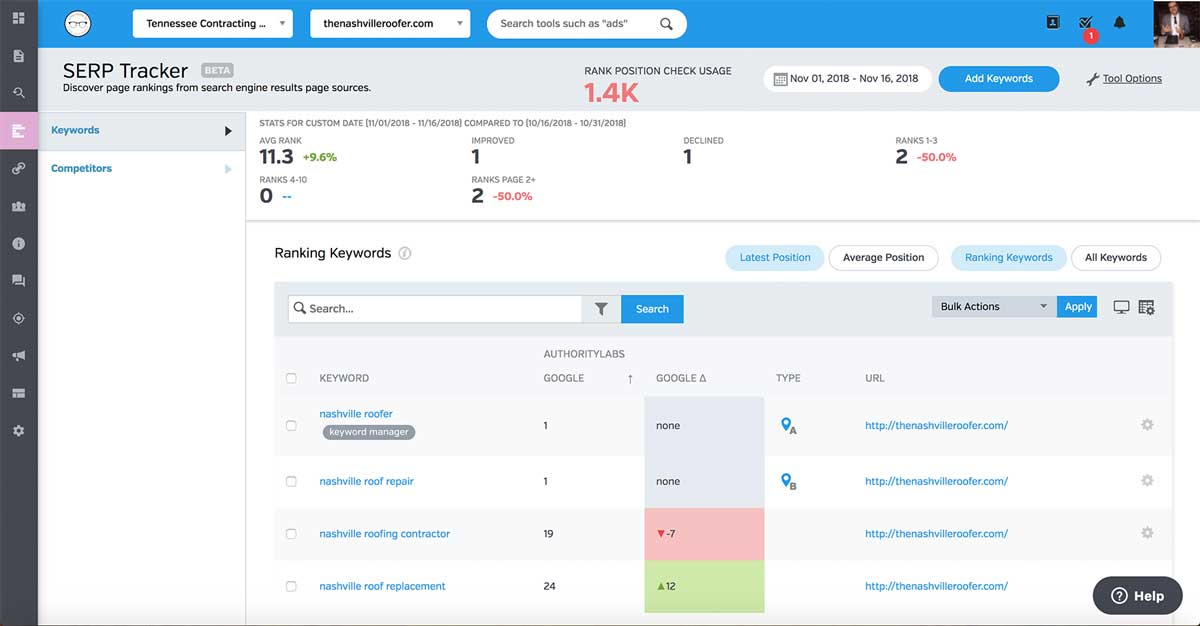
Raven Tools traditionally combined keyword rank tracking, backlink analysis, site audits, and SEO reporting in a single platform, offering a convenient all-in-one SEO toolkit.
However, several limitations have become apparent in 2026, prompting marketers to consider alternatives:
- Limited integrations: Raven Tools supports fewer native connectors for emerging platforms and ad networks, restricting centralized data aggregation.
- Slower data refresh rates: Near-real-time reporting is increasingly necessary for agile campaign management; Raven Tools often falls short in this regard.
- Minimal AI and attribution capabilities: Advanced AI analytics and multi-touch attribution models are largely absent.
- Scalability constraints: Managing large volumes of multi-channel marketing data is challenging on Raven Tools.
- Customization and user experience: Agencies and enterprises seek more flexible dashboards and white-label reporting options than Raven Tools provides.
Given the growing complexity of marketing campaigns and expanding technology stacks, platforms emphasizing data unification, automation, and AI-driven insights have become essential.
Top Raven Tools Alternatives in 2026: Features, Pricing, and Use Cases
This section reviews 6 leading Raven Tools alternatives available in 2026, focusing on features, pricing, and typical use cases.
1. Improvado: Comprehensive Marketing Data Integration and AI Analytics
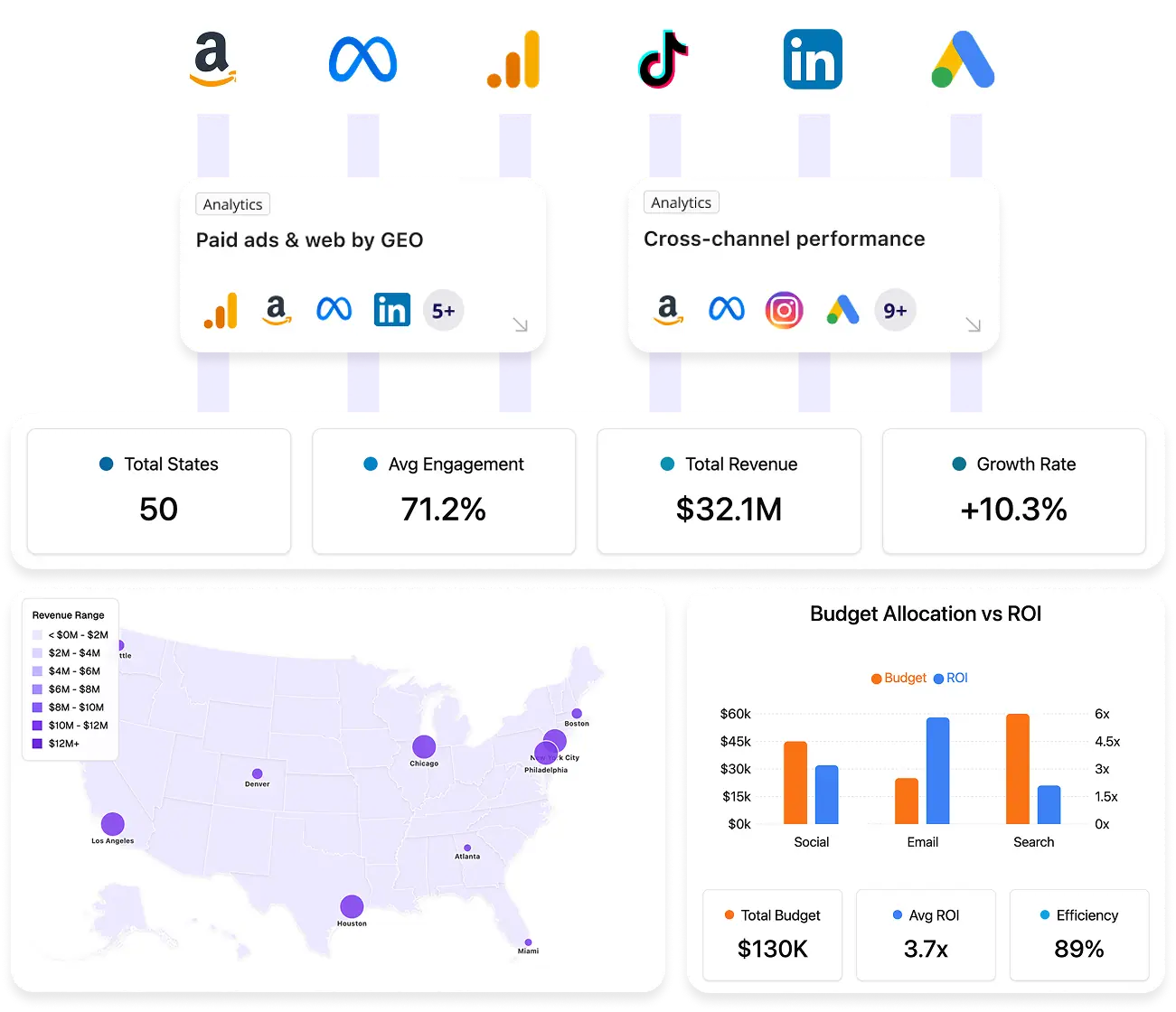
Improvado is a unified marketing analytics platform built to replace fragmented reporting tools. It connects to 1,000+ marketing, SEO, paid media, CRM, and revenue systems through maintained API integrations.
Unlike Raven Tools and other traditional SEO reporting solutions, Improvado centralizes cross-channel data into a governed data warehouse environment. It automates ELT pipelines, standardizes schemas, aligns metric definitions, normalizes currencies and timezones, and resolves identifiers across systems. This eliminates manual exports and spreadsheet-based reconciliation.
The platform supports advanced analytics beyond SEO tracking, including multi-touch attribution, cohort analysis, LTV modeling, and cross-channel ROI measurement.
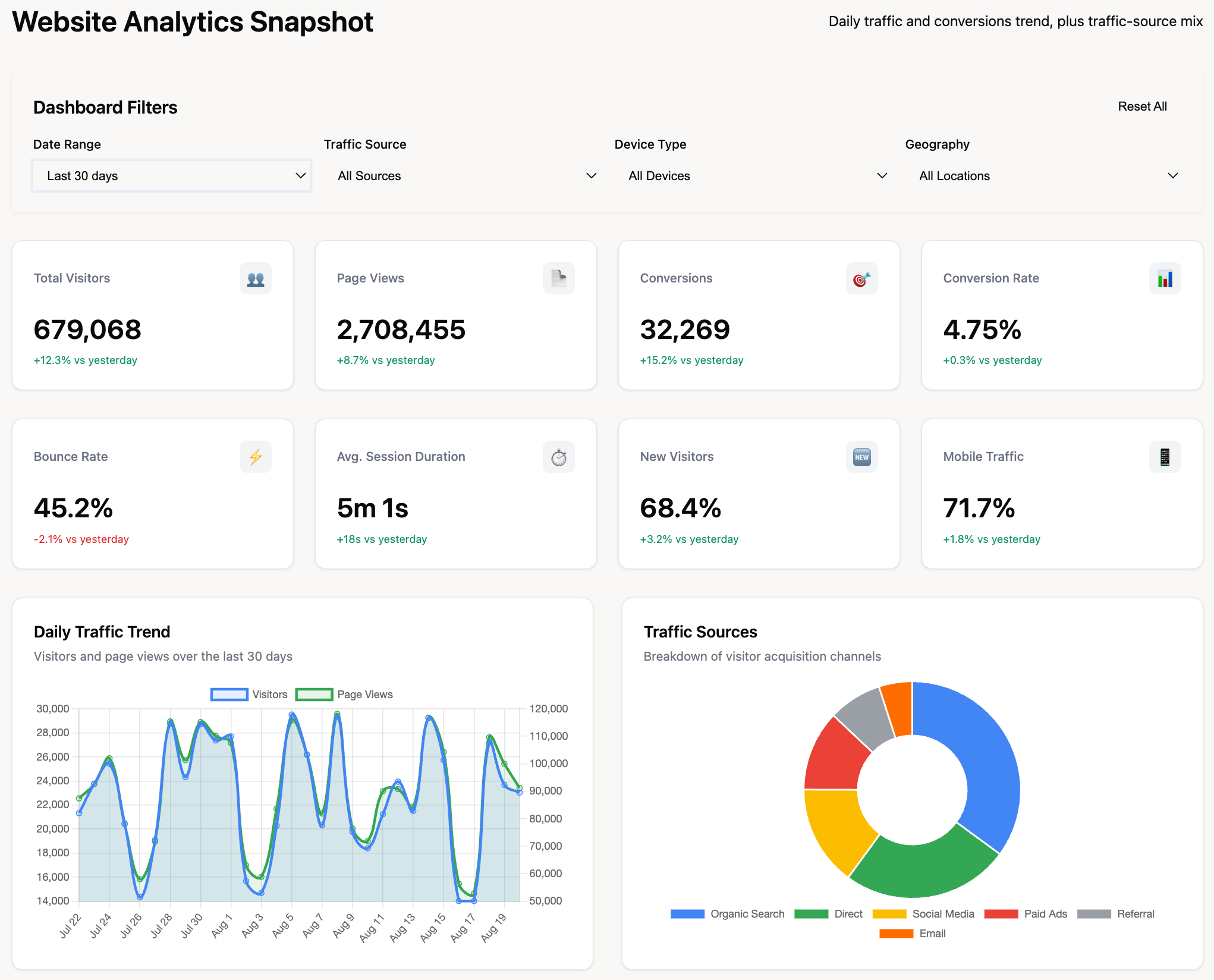
Its AI Agent enables users to query unified data in plain English, generate dashboards, validate anomalies, and build custom reports without writing SQL.
Improvado maintains enterprise-grade compliance standards, including SOC 2, HIPAA, and GDPR, making it suitable for regulated industries and global organizations.
Best for: Medium to large organizations and agencies requiring scalable, cross-channel marketing analytics, governed data infrastructure, and AI-driven insight generation beyond basic SEO reporting.
Pricing: Custom enterprise pricing based on integration scope, data volume, transformation complexity, and deployment requirements.
Tradeoffs:
- Implementation requires structured onboarding and alignment around data modeling and governance.
- While Improvado delivers advanced AI-driven analytics and broad integrations, its complexity and cost may not suit organizations with simpler data needs or limited resources.
2. Semrush: SEO-Centric Research and Monitoring
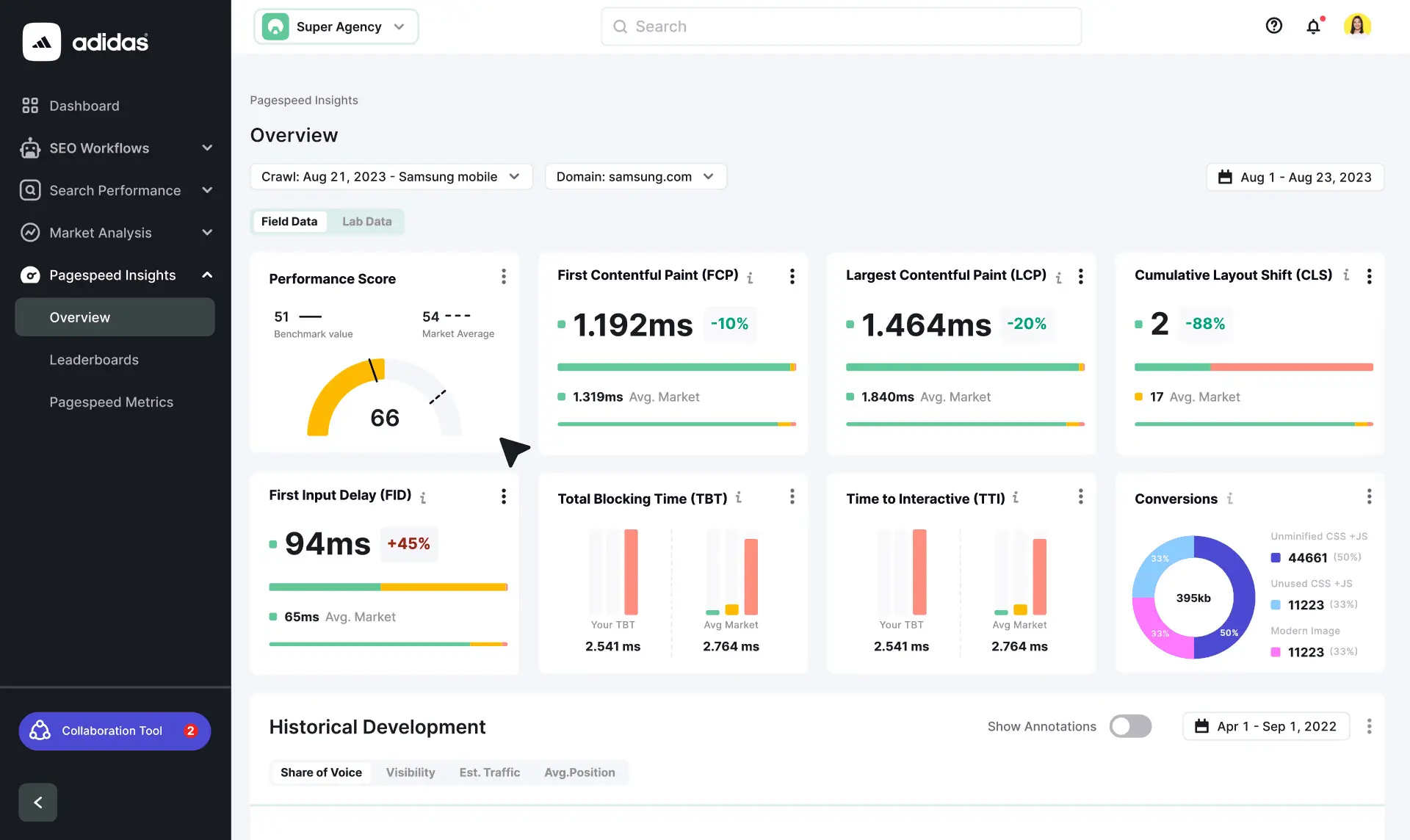
Semrush is an SEO-focused platform centered on keyword research, competitive analysis, backlink auditing, rank tracking, and site health monitoring. It maintains large proprietary keyword and domain databases, enabling competitive benchmarking and organic visibility analysis.
The platform supports campaign tracking, content gap analysis, technical SEO audits, and PPC research within search ecosystems. Reporting features are pre-configured for SEO workflows, with customizable dashboards available at higher tiers.
Compared to broader marketing data platforms, Semrush primarily operates within the search and digital visibility domain. It does not centralize multi-channel performance data into a governed warehouse environment. AI features focus on SEO insights, keyword suggestions, and optimization recommendations rather than cross-channel analytics or attribution modeling.
Best for: SEO teams prioritizing organic search research, competitor monitoring, and rank tracking without requiring full cross-channel data integration.
Pricing: Starts at $117.33 per month billed annually, with tiered plans that expand data limits, reporting capabilities, and user access.
Tradeoffs:
- Limited extensibility beyond SEO and search-related use cases. Multi-channel reporting, advanced attribution modeling, and structured data governance require external integration solutions.
- AI capabilities are focused on search optimization rather than comprehensive marketing intelligence.
3. Ahrefs: SEO and Backlink Analysis Specialist
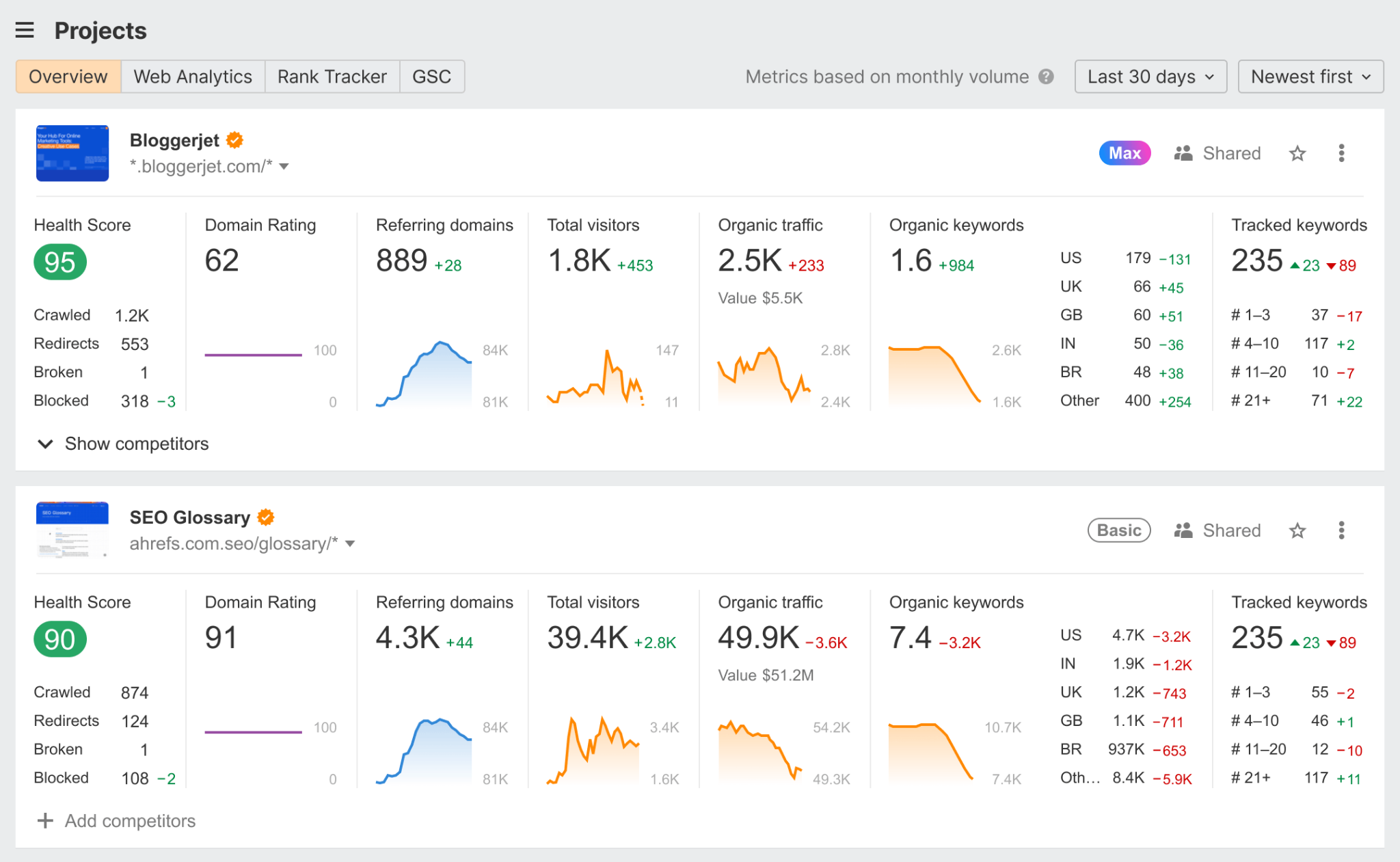
Ahrefs is a specialized SEO tool focused on backlink analysis, keyword research, rank tracking, and competitor benchmarking. It maintains one of the largest link indexes in the industry, making it strong for domain authority analysis and backlink audits.
The platform provides tools for content gap analysis, SERP tracking, and organic traffic estimation. Its interface is streamlined for SEO workflows, which makes it accessible for focused search teams.
Compared to Raven Tools, Ahrefs offers stronger backlink intelligence and competitive link analysis. Both platforms remain primarily SEO-centric.
Ahrefs does not provide native multi-channel marketing connectors. Reporting customization is limited to SEO datasets. It does not support structured data unification across paid media, CRM, ecommerce, or revenue systems. AI capabilities are minimal and focused on search-related insights.
Best for: SEO professionals prioritizing backlink management, keyword research, and organic search visibility tracking.
Pricing: Plans start at $99 per month, with higher tiers expanding data limits and feature access.
Tradeoffs:
- Limited beyond SEO-specific analytics. No integrated cross-channel reporting, attribution modeling, or enterprise-scale data governance.
- Not optimized for organizations requiring unified marketing performance infrastructure.
4. AgencyAnalytics: Agency-Focused Client Reporting
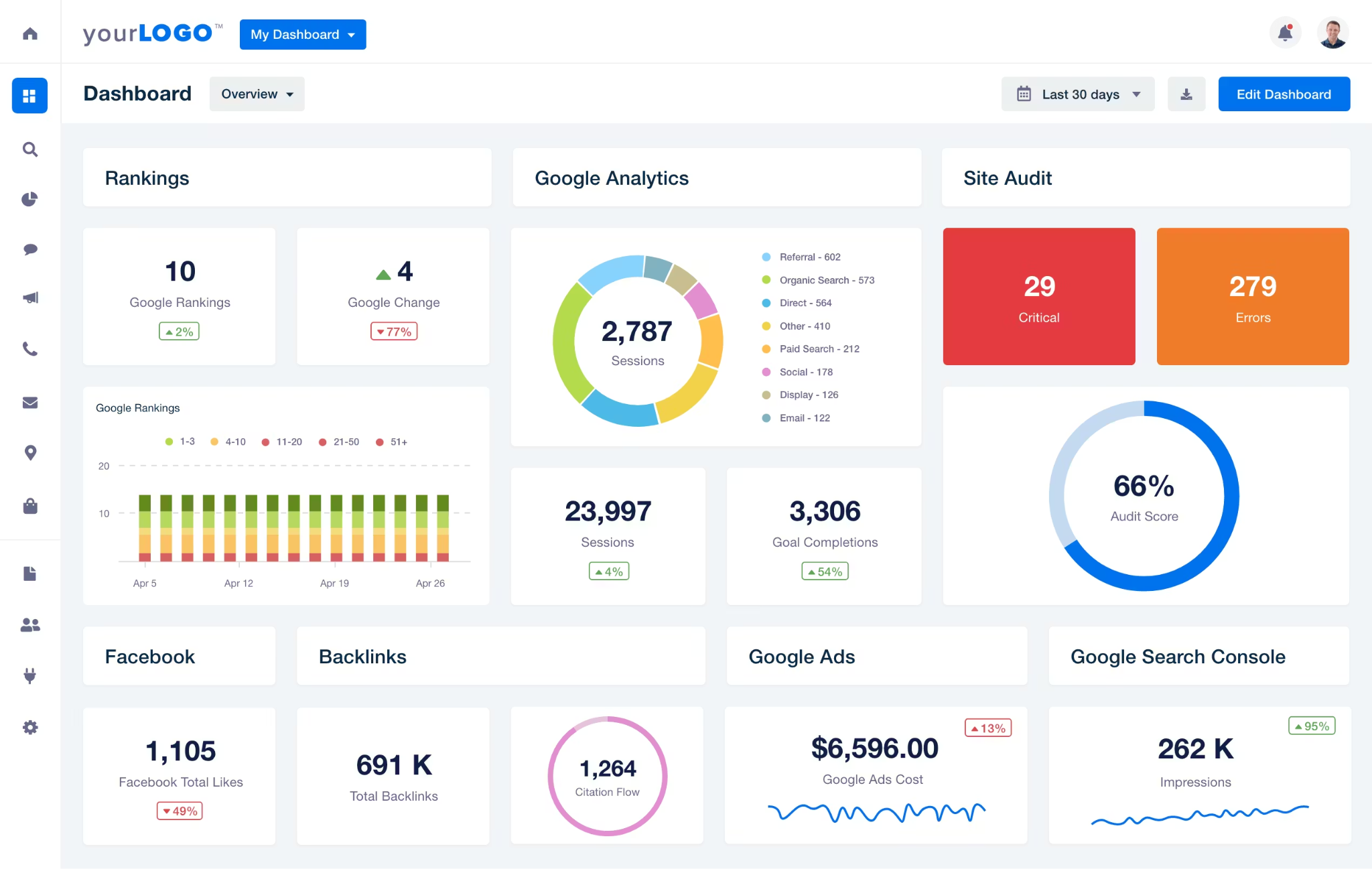
AgencyAnalytics is built for digital marketing agencies that require streamlined client reporting. It integrates SEO, PPC, call tracking, and social media data into pre-configured dashboards. The platform supports white-label reports and automated delivery, making it practical for client-facing workflows.
Compared to Raven Tools, AgencyAnalytics offers a more modern interface and broader PPC and social integrations.
AgencyAnalytics emphasizes ease of use over architectural depth. Data is aggregated within the platform, but it does not provide advanced data modeling, warehouse-level transformations, or complex attribution frameworks.
AI functionality is limited and primarily focused on surface-level reporting assistance.
Best for: Small to mid-size agencies that need efficient, client-ready dashboards across SEO and paid channels without building a full analytics infrastructure.
Pricing: Starts at $49 per month, with pricing increasing based on the number of clients and users.
Tradeoffs:
- Limited support for enterprise-grade governance, advanced modeling, or cross-channel attribution.
- Not designed for large-scale, multi-region data consolidation or warehouse-driven analytics strategies.
5. Databox: Real-Time Marketing Dashboards
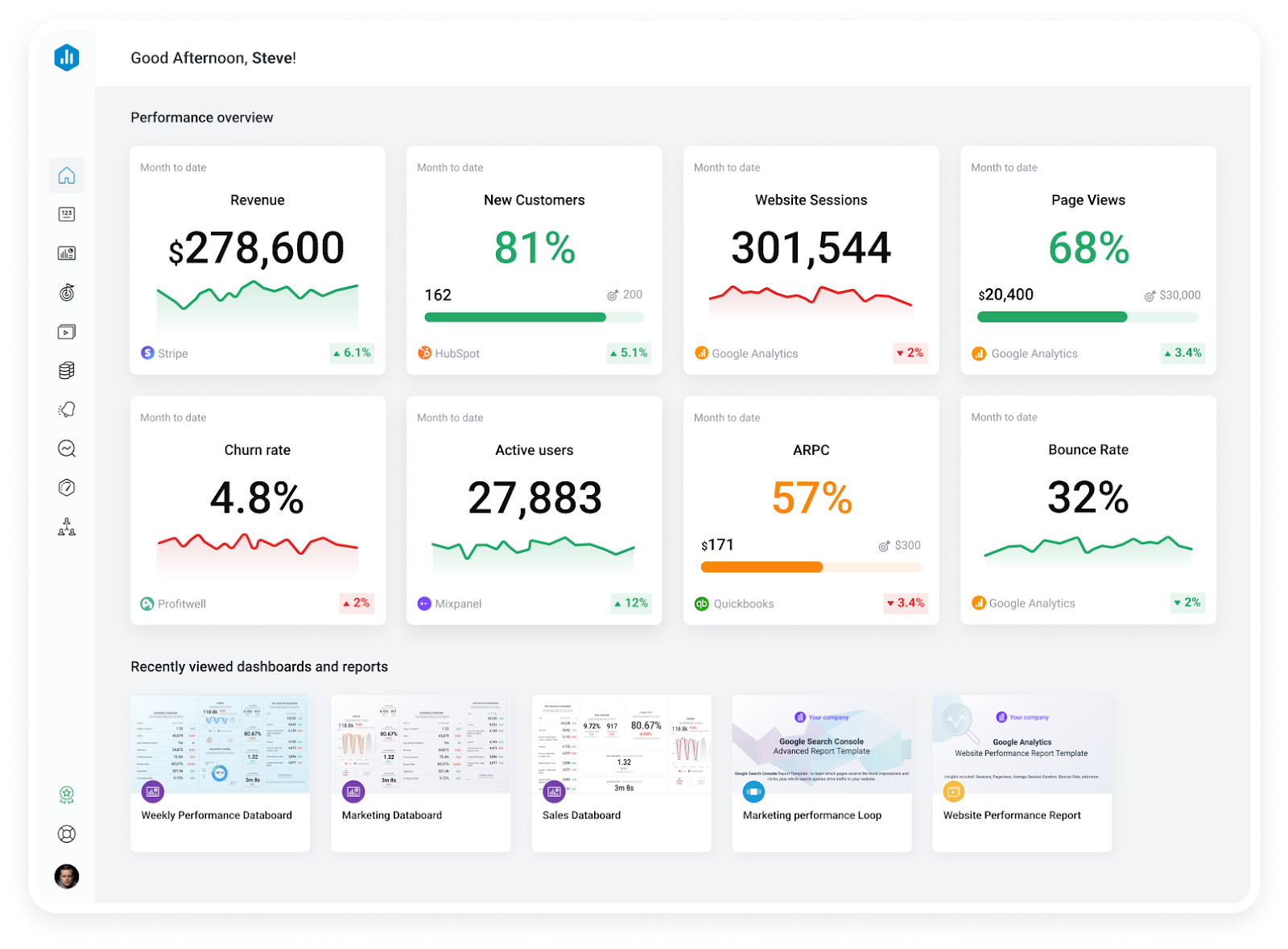
Databox is a performance dashboard tool focused on real-time KPI monitoring across marketing and sales channels. It connects to SEO tools, PPC platforms, CRM systems, and social media sources to surface metrics in visual dashboards.
The platform emphasizes ease of use and pre-built dashboard templates. Users can combine metrics from multiple platforms into a single view without heavy configuration. Automated alerts and mobile-friendly dashboards support operational monitoring.
Compared to Raven Tools, Databox provides stronger real-time visualization capabilities and broader multi-channel coverage.
Best for: Small to mid-size teams that need quick, multi-channel KPI dashboards without building a dedicated analytics infrastructure.
Pricing: Starts at $49 per month, with pricing tiers based on data source volume, features, and user seats.
Tradeoffs:
- Limited advanced modeling, minimal AI analytics, and no built-in multi-touch attribution.
- Not optimized for enterprise-scale data consolidation or governed data architectures.
6. Advanced Web Ranking: Specialized Rank Tracking
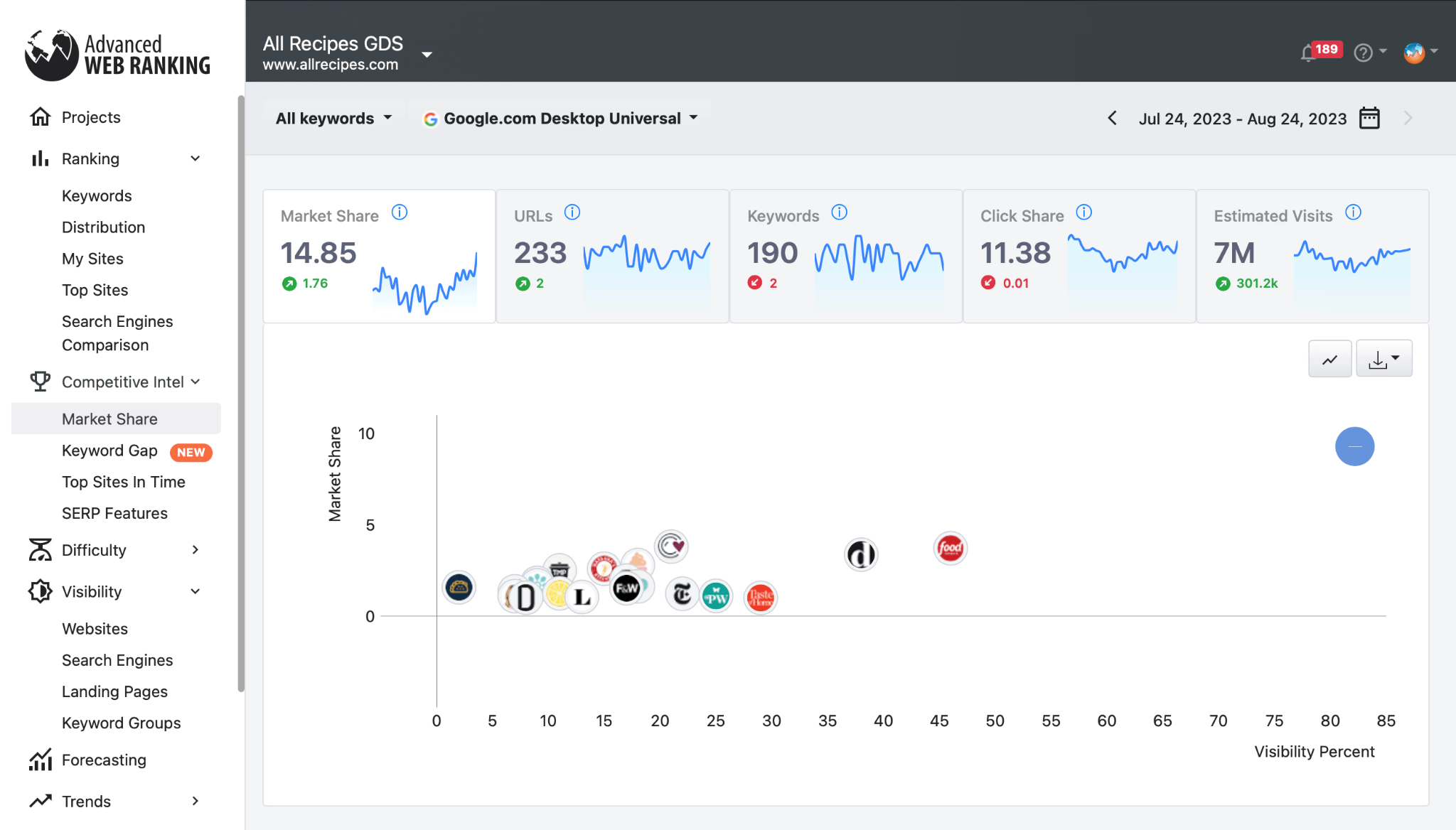
Advanced Web Ranking (AWR) is a specialized SEO tool focused on large-scale keyword position tracking. It supports global and local rank monitoring across major search engines and tracks SERP features such as featured snippets, local packs, and rich results.
The platform provides granular rank tracking, competitor keyword analysis, and white-label reporting. It is optimized for precision and scale in tracking keyword movements across markets and devices.
Compared to Raven Tools, AWR delivers stronger and more configurable rank tracking capabilities.
Best for: Agencies and enterprises that require high-accuracy, large-scale rank tracking without broader marketing analytics infrastructure.
Pricing: Varies based on the number of keywords tracked, update frequency, and reporting requirements.
Tradeoffs:
- Limited beyond SEO rank monitoring. No integrated multi-channel reporting, AI insights, or attribution frameworks.
- Not suitable for organizations seeking unified marketing analytics across paid, organic, CRM, and revenue systems.
Decision Framework: How to Choose the Right Raven Tools Alternative in 2026
Choosing a Raven Tools alternative depends on your organization’s size, data complexity, and marketing priorities. The following framework aligns platform strengths with common needs:
- Extensive multi-channel data integration and AI analytics: Improvado
- Focused SEO performance, keyword research, and backlink analysis: Semrush or Ahrefs
- Agency client reporting with white-label and moderate AI needs: AgencyAnalytics or DataBox
- Large-scale keyword rank tracking: Advanced Web Ranking
- Budget-conscious with modest data needs: Entry-level SEMrush, Ahrefs, or DataBox
- High compliance and data governance requirements: Improvado
Decision Table
| Condition | Recommended Platform |
|---|---|
| Extensive data integrations + AI-powered analytics | Improvado |
| SEO-focused keyword and backlink research | Semrush or Ahrefs |
| Agency client reporting with white-label needs | AgencyAnalytics or DataBox |
| Large-scale rank tracking needs | Advanced Web Ranking |
| Startup or small business with limited budget | Entry-level Semrush or DataBox |
Scoring Rubric: Evaluating Raven Tools Alternatives by Key Criteria
To assess alternatives objectively, platforms are evaluated according to criteria weighted by typical marketer priorities.
| Criteria | Weight (%) | Description |
|---|---|---|
| Data Integration | 25% | Number and quality of native connectors and sources |
| Reporting Speed | 20% | Speed and frequency of data refresh and report generation |
| Customization | 15% | Flexibility in dashboards, reports, and workflows |
| AI and Attribution | 15% | Availability and sophistication of AI and attribution models |
| Pricing | 15% | Cost-effectiveness and pricing transparency |
| Compliance and Security | 10% | Certifications and data governance features |
Raven Tools Alternatives Scoring Summary
| Criteria | Weight | Improvado | SEMrush | Ahrefs | AgencyAnalytics | DataBox |
|---|---|---|---|---|---|---|
| Data Integration | 25% | 9/10 (1,000+ connectors, broad coverage) | 7/10 (Strong SEO focus) | 6/10 (SEO only) | 7/10 (Agency integrations) | 6/10 (Dashboard-focused) |
| Reporting Speed | 20% | 9/10 (Automated, near real-time) | 7/10 (Frequent SEO updates) | 7/10 (Regular SEO updates) | 8/10 (Real-time client reports) | 7/10 (Real-time dashboards) |
| Customization | 15% | 9/10 (Highly customizable dashboards) | 8/10 (Custom SEO reports) | 7/10 (Basic customization) | 7/10 (White-label reporting) | 6/10 (Template-based) |
| AI and Attribution | 15% | 10/10 (Advanced AI, multi-touch attribution) | 6/10 (SEO-focused AI) | 6/10 (Minimal AI) | 5/10 (Limited AI) | 5/10 (No AI) |
| Pricing | 15% | 7/10 (Enterprise pricing) | 8/10 (Tiered plans) | 7/10 (Competitive SEO pricing) | 8/10 (Agency-friendly) | 9/10 (Flexible SMB pricing) |
| Compliance and Security | 10% | 10/10 (SOC 2, HIPAA, GDPR) | 7/10 (Standard security) | 7/10 (Standard security) | 6/10 (Basic security) | 6/10 (Basic security) |
Migration Guide: Switching from Raven Tools and Zapier to a Modern Platform
Migrating from Raven Tools or legacy automation tools like Zapier to a modern analytics platform requires careful planning to ensure data integrity and minimize disruption.
Pre-Migration Audit
Inventory all current data sources, integrations, reports, and workflows. Identify dependencies, data transformations, and critical KPIs to replicate accurately.
Step 1: Configure Connectors and Validate Data
Set up data connectors on the new platform. Validate data accuracy and completeness by comparing sample reports with those from legacy tools.
Step 2: Parallel Reporting and Reconciliation
Run legacy and new reports concurrently for a transition period. Address discrepancies promptly to ensure decision-making is based on reliable data.
Step 3: User Training and Change Management
Train marketing and analytics teams on new dashboards, features, and workflows. Early engagement reduces resistance and improves adoption.
Step 4: Gradual Cutover and Monitoring
Transition reporting responsibilities in phases. Monitor system performance and data refresh rates to detect anomalies early.
Risks and Mitigation
- Data normalization differences: New platforms may calculate metrics differently; document definitions and recalibrate KPIs accordingly.
- User resistance: Engage stakeholders early, emphasizing benefits and providing support.
- Integration complexity: Complex connectors might require vendor support or custom development.
Rollback and Contingency Planning
Maintain access to legacy tools during migration. Prepare rollback plans to revert if critical issues arise.
Common Pitfalls and Avoidance
- Overlooking metric definition differences can cause inconsistencies; maintain clear documentation.
- Neglecting user training hampers adoption; provide thorough resources and sessions.
- Underestimating integration complexity delays projects; involve technical teams early and allocate buffer time.
Methodology: How We Evaluated Raven Tools Alternatives for 2026
Our evaluation combined multiple sources and approaches to provide a balanced assessment:
- User reviews: Aggregated feedback from platforms such as G2 and Capterra capturing real-world experiences.
- Vendor documentation: Analyzed official feature lists, pricing, and compliance certifications.
- Expert insights: Consulted SEO and marketing analytics professionals for qualitative perspectives.
- Hands-on testing: Where feasible, tested platforms with representative datasets to assess usability and reporting fidelity.
Limitations: Given rapid platform evolution, features and pricing may change post-publication. Specific industry or niche requirements may warrant further tailored analysis.
Conclusion
Selecting a Raven Tools alternative in 2026 involves balancing features, integrations, budget, and compliance needs. While Raven Tools continues to serve SEO functions, many marketing teams benefit from platforms that offer broader data unification, faster reporting, and AI-driven insights.
Improvado stands out for enterprises requiring scalable, customizable marketing analytics with extensive connectors and AI capabilities but involves higher implementation effort and cost. SEMrush and Ahrefs remain strong choices for SEO-centric teams, while AgencyAnalytics and DataBox are well-suited for agencies prioritizing client reporting.
Using the decision framework and scoring rubric, combined with a structured migration plan, can facilitate a smooth transition to a platform that better supports your marketing goals in 2026.
For tailored advice or to explore Improvado’s AI-driven analytics, consider requesting a demo or consulting an expert.