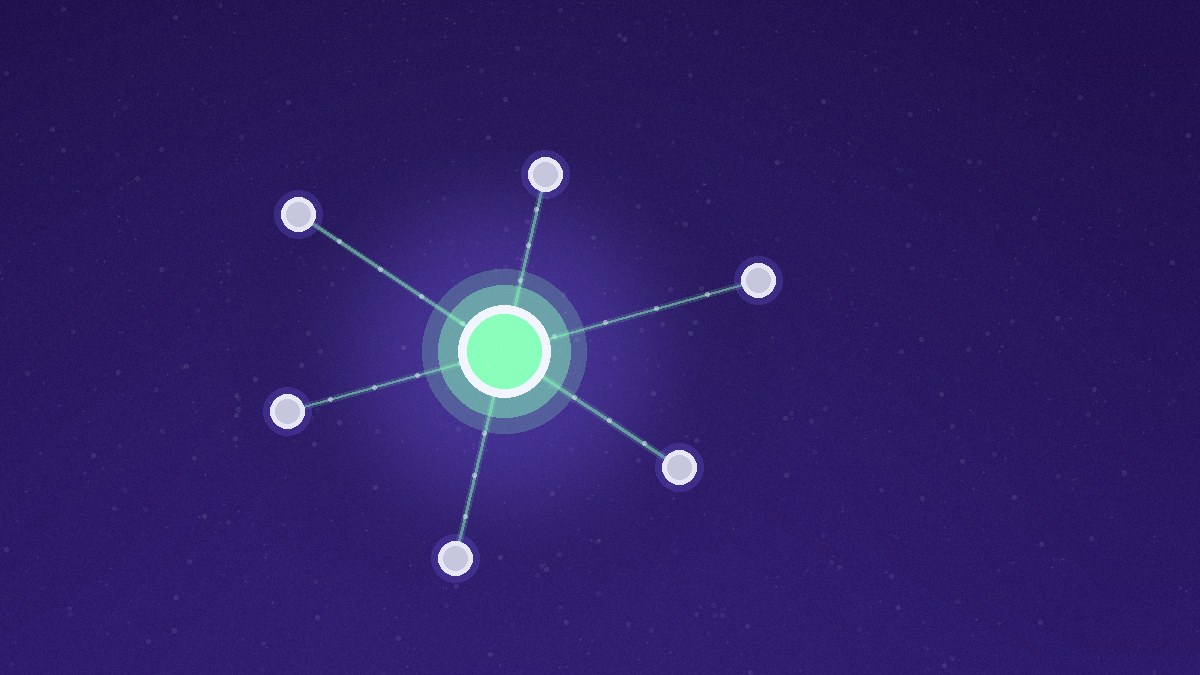



In conversations with marketing leaders across our enterprise customer base, we keep seeing the same shape: a dozen or more AI tools deployed across paid, content, lifecycle, and analytics, and almost no shared memory between any of them.
That's not a tool stack. That's a zoo.
The interesting thing is that these tools aren't technically disconnected. They pass data between each other at the seams. They integrate. The problem is one layer deeper: no shared memory, no defined scope, no long-running context that persists across the stack. Each agent holds its own local snapshot of your strategy and treats it as canonical.
If you're feeling slow declines in marketing ROI with no clean root cause, this is almost certainly part of it. The category has a name now: agent sprawl. Industry analysts like Gartner have started publishing frameworks for it: typically focused on security, identity, and procurement governance. Those framings are useful, but they tend to miss the marketing-specific failure mode, which is the one that costs you money quietly.
This is a walkthrough of what agent sprawl actually looks like inside a marketing org, why the obvious fix doesn't work, and the architectural pattern that does.
Key Takeaways
- Agent sprawl is not tool sprawl. Tool sprawl is having too many products. Agent sprawl is having multiple AI agents that each hold contradictory versions of the same strategic facts.
- The structural signature is silent ROI decay. No agent produces an error. Each is internally consistent. The aggregate produces declining performance with no clean root cause.
- Integrations don't fix it. Data moves between tools, but every agent still keeps its own snapshot of ICP, segments, and objectives. The snapshots drift.
- The fix is a shared knowledge graph. One canonical layer every agent reads from and writes to — not a dozen static copies maintained in parallel.
- You can diagnose it in four questions. Ask any two AI tools in your stack who your ICP is. If the answers don't match, you've already found the sprawl.
What is agent sprawl?
Agent sprawl is the proliferation of AI agents across a single function — paid media, content, analytics, attribution, lifecycle, brand — without a shared layer of context, identity, or governance between them.
It's adjacent to two terms you've probably seen:
- AI sprawl, a generic term for unmanaged AI adoption across an organization. Usually applied to security and compliance contexts.
- Tool sprawl, too many SaaS products doing overlapping work. Predates AI by about a decade.
Agent sprawl is a different shape. The tools talk to each other. The data flows. The integrations are mostly fine. What's missing is a canonical answer to questions like "who's our ICP?" or "what's our current campaign hypothesis?", an answer that all the agents share and that updates in one place when the strategy team makes a change.
When that canonical layer doesn't exist, each agent ends up holding its own answer. Those answers drift apart. Over weeks or months, the stack stops behaving like one marketing intelligence and starts behaving like several intelligences who don't talk to each other.
When we recognized the problem ourselves: the 70-skill threshold
We started taking agent sprawl seriously inside Improvado when our own count of internal skills, the small specialized prompts and agents we use for sales, marketing, finance, and ops crossed 70.
Below that threshold, the team could hold the whole stack in working memory. Somebody on the call would notice when two skills disagreed about an ICP definition or a metric, and the disagreement got resolved in the same conversation that surfaced it. Past 70, that informal coherence broke. Two skills could give contradictory answers to the same strategic question for weeks without anyone catching it. Until a number didn't add up in a board prep and we worked backward to find the divergence.
The fix wasn't to reduce the skill count. The fix was to give all of them a shared canonical layer to read from, so the divergences couldn't happen silently. The rest of this article is what we learned while building that layer.
The four silent symptoms
Most articles on this topic stop at the abstract definition. What it actually looks like inside a marketing org is more specific. Four symptoms, all real, none of which surface as an error:
1. Paid media optimizes against a stale ICP
Your paid media AI is bidding against the ICP definition your strategy team updated six weeks ago. The new definition lives in a Notion doc and three campaign briefs. The bid-time agent doesn't read either of those. It runs the prior version because that's what was in its config when you deployed it.
You won't see this in the bid logs. You'll see it in CAC creeping up across the same channels with no obvious campaign change.
2. Campaign automation tests against forgotten segments
Your automation tool is A/B-testing messages against an audience segmentation nobody on the brand side recognizes anymore. The segment names are still valid; the meaning behind them shifted. The agent doesn't know that "high-intent enterprise" used to mean one thing and now means another.
Tests run, p-values come back, decisions get made — all against a definition that's no longer the strategy.
3. Content tools use a voice framework you quietly deprecated
Your content stack is writing in a brand voice you moved off of two quarters ago. The framework lives in the agent's system prompt or a fine-tune dataset. The new framework lives in a Google Doc. Nobody linked them.
Output looks technically fine. It's well-formatted, on-topic, grammatically clean. It just doesn't sound like the company anymore. You catch this anecdotally — somebody in sales mentions it sounds different on the website. By then a quarter of content has shipped.
4. Analytics attributes to a funnel model that exists only in a doc
Your analytics stack is reporting conversions against a funnel model that the analytics team replaced. The new model is in a Notion doc that the dashboards never read. The agent built on top of the dashboards is reporting numbers nobody on the team trusts anymore.
You'll notice this when board prep takes three times longer than it should, because somebody has to manually rebuild the numbers against the current model.
The structural signature of all four: each agent is digesting its own inputs correctly. No agent is broken. The aggregate is producing ROI that trends down with no clean root cause.
It's still intelligence. It's just intelligence with schizophrenia.
Why "more integrations" isn't the fix
The reflex response to this is to add integrations. Connect the campaign tool to the analytics tool. Pipe data from the ICP doc into the bid agent. Webhooks everywhere.
It doesn't fix the problem because the problem isn't a missing pipe. It's a missing layer.
Integrations move data between tools. They don't create a canonical source of truth. After you add another batch of integrations, each agent still holds its own local snapshot of strategy; the snapshots are now updated more frequently, but they're still independent copies that can drift apart between updates.
The behavioral result is the same: contradictory versions of strategy, just refreshed more often.
The architectural distinction matters here. An integration is a point-to-point pipe — it copies data from one system to another, and each downstream system keeps its own version. A shared knowledge graph enforces a single write path and a single read path against versioned, queryable entities. Every agent reads the same canonical record at execution time. There is no second copy that can fall out of sync, because there is no second copy.
A second class of partial fix is governance documentation — runbooks, ownership matrices, AI committees. These help with accountability after something goes wrong. They don't prevent the drift in the first place, because the agents don't read the runbook.
The architectural fix: one shared knowledge graph
The pattern that actually works is structural. One canonical layer — a knowledge graph — that holds the authoritative version of:
- ICP definition
- Audience segments and their current meaning
- Brand voice framework
- Campaign hypotheses currently being tested
- Funnel model and conversion definitions
- North Star metric and its current target
Every agent in the stack reads from this layer at execution time, not from a frozen snapshot taken when the agent was deployed. When the strategy team updates the ICP, every downstream agent picks up the new definition on the next run.
That's it. That's the whole pattern. The hard part is building the layer.
Most marketing teams approach this either by:
- Bolting context onto a model. This is the naive RAG approach — a retrieval system that injects strategic docs into each agent's prompt. Works well for unstructured retrieval. Document-chunk RAG can struggle with structured strategic facts that need to be queried with precision rather than fuzzy-searched, though more recent variants (graph-RAG, SQL-backed RAG, hybrid retrieval) close some of this gap. Those variants are effectively partial reimplementations of the next pattern.
- Building a real knowledge graph. Nodes for entities (ICPs, segments, campaigns, metrics), edges for relationships (this campaign tests this hypothesis against this segment). The orchestration runtime queries the graph at execution time and supplies the retrieved context to agents through tool calls; the graph updates in one place; consistency is enforced at the data layer instead of through process discipline.
At Improvado we build the second. The orchestration layer we call Miras holds the canonical version of marketing strategy as a graph, sits underneath an AI Agent that every campaign, attribution, and content team queries directly, and supplies those agents with graph-retrieved context at execution time. It's connected to Improvado's marketing data integrations catalog (1000+ platforms, per Improvado's own catalog), so the graph stays current with what's actually happening in-channel — not what the configs claimed six weeks ago. The point isn't the specific tool. The point is: the architecture works only if there's one canonical layer, not a dozen.
A four-question diagnostic for your stack
You don't need a consulting engagement to diagnose agent sprawl. You need a five-minute test.
Pick any two AI tools in your marketing stack. Ask each of them, separately:
- Who is our ICP? What firmographic, behavioral, and demographic profile defines our ideal customer?
- What is our core value proposition? What's the one-sentence claim our entire stack is supposed to be reinforcing?
- What is the current campaign hypothesis? What are we actively testing this quarter and against what success criterion?
- What is our North Star metric this quarter? What single number does everyone agree we're moving?
If the answers from any two tools don't match, you've found agent sprawl. It just hasn't surfaced in the dashboard yet.
The deeper finding is usually that none of the answers from the tools match the answers your strategy team would give. That gap is the silent ROI tax.
How to consolidate without ripping out the stack
Agent sprawl rarely warrants a full re-platform. The path that works in practice:
- Pick one orchestrator. Choose the layer that will hold canonical strategic facts. It can be a knowledge graph product, a marketing data platform with agentic capabilities, or a custom-built layer. What matters is that there's exactly one.
- Move one fact at a time. Don't migrate everything at once. Start with ICP. Move the canonical definition into the orchestrator. Point one downstream agent at it. Verify the downstream agent's outputs change as expected when the ICP updates.
- Add the next fact. Once ICP is wired, move segments. Then campaign hypotheses. Then voice. Then funnel model.
- Deprecate snapshots as you go. As each agent starts reading from the orchestrator, retire its local snapshot. Don't leave both in place — that's where future drift starts.
Most teams get meaningful behavioral change after the first two facts are migrated, because ICP and segments together drive most of the upstream decisions that the rest of the stack inherits.
FAQ
What is agent sprawl?
Agent sprawl is the proliferation of AI agents across a single function — usually marketing or operations — without a shared layer of strategic context between them. Each agent holds its own local snapshot of the company's strategy, and the snapshots drift apart over time. The result is a stack that looks integrated but produces contradictory outputs.
What is AI sprawl?
AI sprawl is the broader, organization-wide version of the same pattern. It includes shadow AI usage (employees using consumer LLMs for work), redundant AI tooling across departments, and lack of centralized governance for AI procurement and security. Agent sprawl is a specific subset concerned with autonomous agents and the lack of shared strategic context between them — which can happen within a single function or across multiple functions in a company.
How does agent sprawl differ from tool sprawl?
Tool sprawl is too many SaaS products doing overlapping work. The problem there is cost and integration overhead. Agent sprawl is multiple autonomous AI agents holding contradictory versions of the same strategic facts. The problem there is silent behavioral drift — agents that look like they're working but are optimizing against stale assumptions.
What is AI agent governance?
AI agent governance is the set of practices, policies, and architectural patterns that keep autonomous AI agents aligned with company strategy, compliant with regulations, and accountable when they produce wrong outputs. It typically covers identity, access, auditability, output review, and — increasingly — shared context layers so that multiple agents don't disagree with each other.
Why do you need multiple AI agents?
Different agents specialize in different workflows: paid media bidding, content generation, lifecycle email, attribution modeling, brand monitoring. A single general-purpose agent rarely outperforms specialists at any of these. The trade-off is that the specialists need a shared context layer, or you get agent sprawl.
How do I know if my marketing stack has agent sprawl?
Run the four-question diagnostic in the section above. If any two AI tools in your stack give you different answers about your ICP, current campaign hypothesis, value proposition, or North Star metric, you have agent sprawl. The bigger the divergence, the more revenue you're leaking silently.