
Selecting the right robotic process automation (RPA) platform remains a critical challenge for organizations aiming to optimize workflows without overspending or complicating their technology environments.
UiPath continues to be a major market player in 2026, yet concerns around licensing cost, cloud scalability, and evolving automation requirements have prompted many businesses to explore UiPath alternatives.
This guide examines top UiPath competitors through a data-driven comparison, a transparent scoring rubric, a migration roadmap, and a practical decision framework. The goal is to help you identify the best platform aligned with your organization’s automation maturity, budget, and strategic priorities.
Key Takeaways
- UiPath remains a leader, but competitors now match or exceed it in cloud scalability, AI capabilities, and pricing flexibility.
- Microsoft Power Automate stands out for Microsoft-native environments and cost efficiency.
- Automation Anywhere and Appian differentiate through AI-driven automation and broader process orchestration.
- Blue Prism remains strong in governance-heavy and regulated enterprise environments.
- Emerging agentic AI platforms introduce adaptive, autonomous workflows but require higher maturity.
- Platform selection should align with cloud strategy, compliance needs, automation complexity, and total cost.
- For marketing and data-driven teams, automation also includes governed data workflows. Platforms like Improvado automate data extraction, transformation, and insight generation, not just UI-level task automation.
Understanding UiPath and the 2026 RPA Landscape
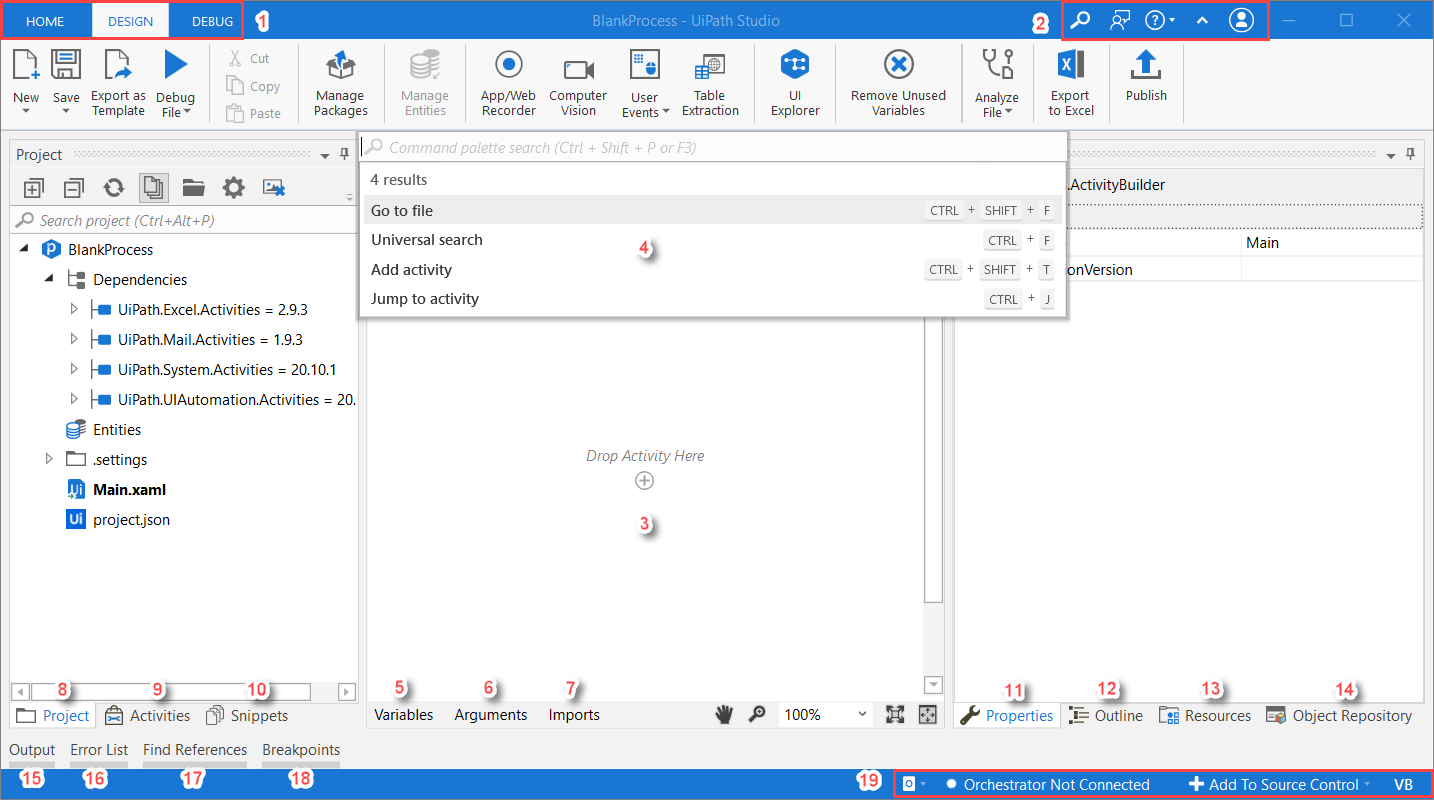
UiPath has established itself as a comprehensive RPA platform supporting both attended and unattended automation, orchestration, and an expanding AI portfolio.
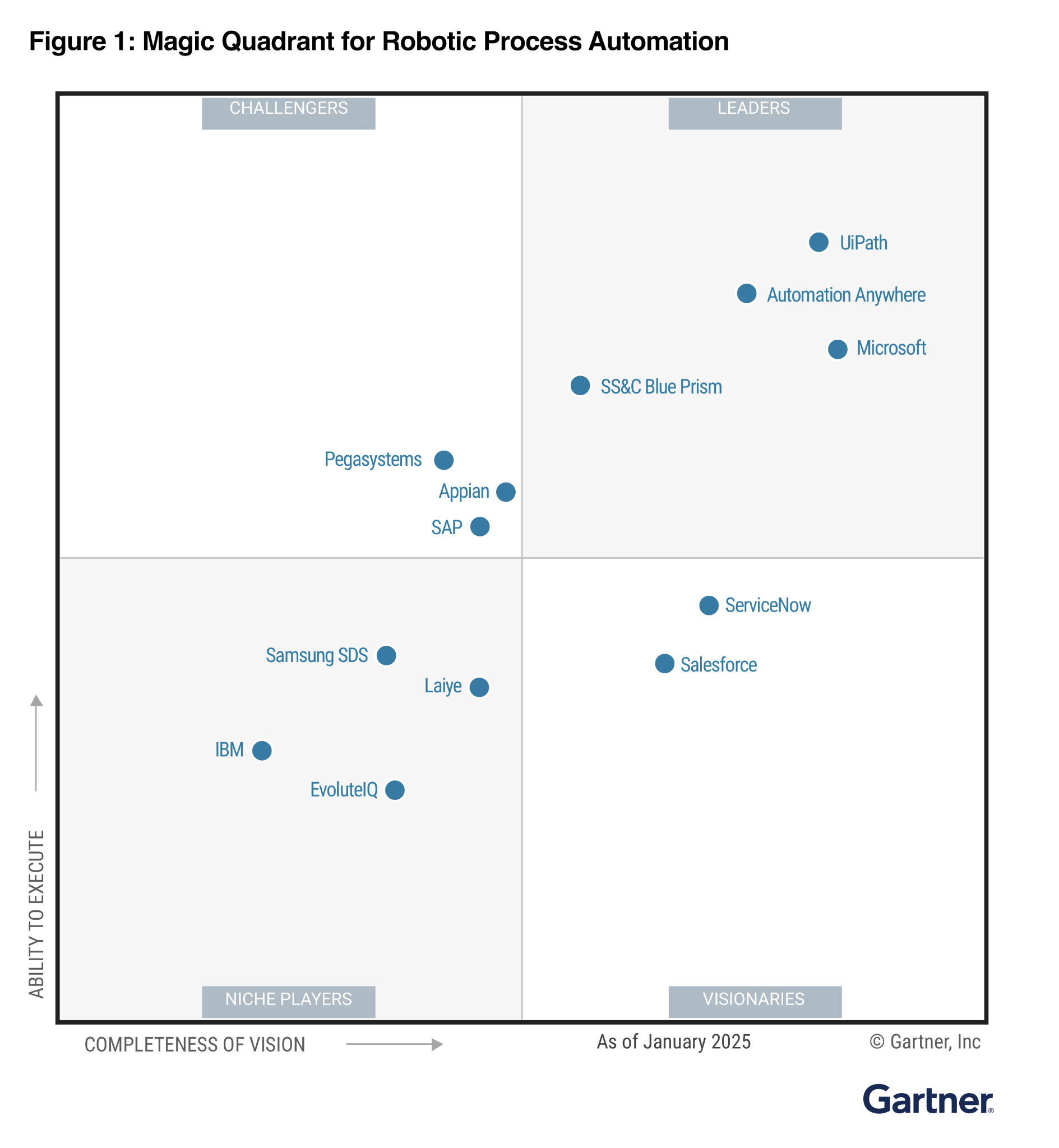
According to Gartner’s Magic Quadrant for RPA, UiPath retains a significant market share but faces intensifying competition as RPA increasingly converges with process intelligence and cloud-native architectures.
Key challenges reported by UiPath customers this year include:
- Cost and licensing complexity: Enterprise pricing models can be complex and unpredictable, particularly for mid-market firms managing rapid scaling.
- Scalability and cloud readiness: Despite investments in cloud capabilities, deploying and managing unattended bots across hybrid environments remains a technical challenge for some users.
- Process mining and intelligence limitations: While UiPath offers process mining, competitors have advanced AI-driven insights that better support continuous process optimization.
- Integration flexibility: Some organizations express concerns about potential vendor lock-in and limited API extensibility compared to newer platforms.
These factors motivate organizations to reassess their automation platforms in favor of alternatives that may better meet evolving digital transformation goals.
Key Criteria for Evaluating UiPath Competitors in 2026
Choosing an RPA platform requires a multi-dimensional evaluation beyond feature checklists.
Based on industry reports and verified user feedback, the following criteria reflect enterprise and mid-market priorities:
- Process automation capabilities: Support for attended and unattended bots, ease of use through low-code/no-code interfaces, orchestration features, and exception management.
- Process mining and intelligence: Tools for process discovery, real-time monitoring, bottleneck analysis, and AI-based optimization recommendations.
- Platform scalability and cloud architecture: Cloud-native design, support for multi-tenant environments, elastic scaling, and hybrid deployment options.
- Integration ecosystem: Availability of pre-built connectors and API extensibility for ERP, CRM, and cloud service integrations.
- Security, compliance, and governance: Adherence to standards like SOC 2 and ISO 27001, role-based access control, audit logging, and data privacy compliance.
- Pricing models and total cost of ownership: Transparency in subscription or perpetual licenses, cost predictability as automation scales, and flexibility for various customer segments.
- Vendor support and community: Accessibility of professional services, training resources, active user communities, and vendor responsiveness.
Scoring Rubric for UiPath Competitor Evaluation
To enable an objective comparison, we assigned weights to each criterion and scored platforms on a scale from 1 (poor) to 5 (excellent). Scores aggregate data from Gartner, Forrester, verified user reviews, and vendor documentation as of early 2026.
| Criteria | Weight (%) | UiPath | Microsoft Power Automate | Automation Anywhere | Appian | Blue Prism | Notes |
|---|---|---|---|---|---|---|---|
| Automation Capability | 25 | 4.5 | 4.3 | 4.2 | 4.0 | 3.8 | UiPath leads in bot flexibility; Microsoft close behind with strong attended/unattended support. |
| Process Mining, Intelligence | 20 | 3.8 | 4.5 | 4.0 | 4.3 | 3.9 | Microsoft and Appian excel in AI-driven process intelligence; UiPath somewhat behind. |
| Scalability, Cloud Readiness | 15 | 3.5 | 4.7 | 4.1 | 3.8 | 3.9 | Power Automate benefits from Azure’s cloud-native infrastructure. |
| Integration Ecosystem | 15 | 4.7 | 4.5 | 3.9 | 3.7 | 3.5 | UiPath and Microsoft offer the broadest connector libraries. |
| Security, Compliance | 15 | 4.8 | 4.6 | 4.4 | 4.2 | 4.0 | All platforms maintain key certifications; governance features vary in granularity. |
| Pricing + Total Cost of Ownership | 10 | 3.2 | 4.0 | 3.8 | 3.5 | 3.0 | Microsoft offers more transparent and competitive pricing; UiPath’s model is less predictable. |
| Total | 100 | 4.1 | 4.5 | 4.0 | 4.0 | 3.8 |
Scores are based on publicly available information and may vary depending on specific organizational contexts.
Top UiPath Competitors in 2026: In-Depth Platform Comparisons
1. Microsoft Power Automate + Azure AI Foundry
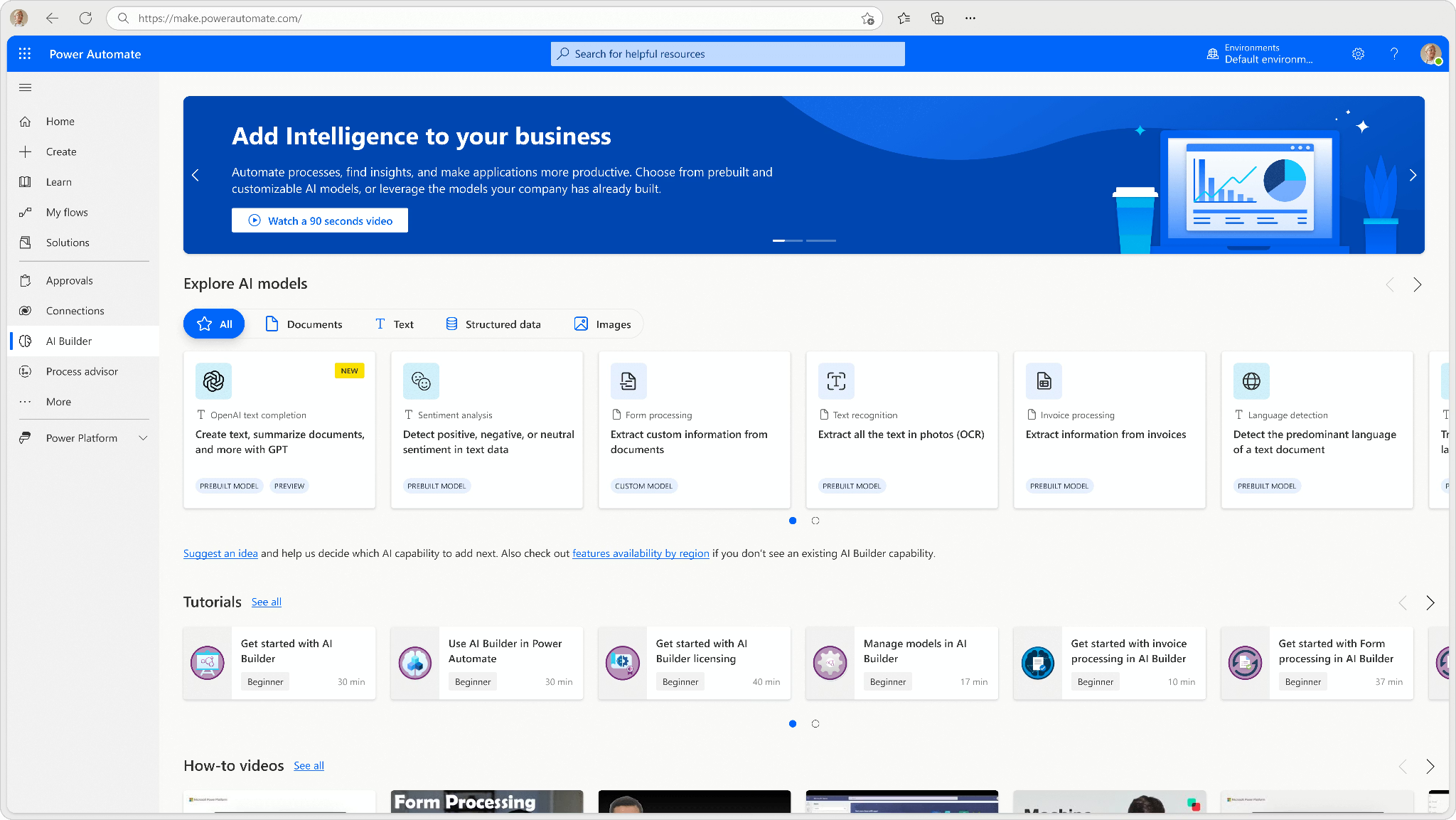
Microsoft Power Automate integrates tightly with the broader Microsoft ecosystem, including Azure AI, Dynamics 365, and Microsoft 365, delivering a unified automation experience. It supports both attended and unattended bots and leverages AI Builder for document processing, form recognition, and predictive analytics.
Best for: Organizations heavily invested in Microsoft technologies seeking scalable, cloud-native automation with strong AI capabilities. Pricing follows competitive subscription tiers suitable for small to large enterprises, generally more transparent and predictable than UiPath’s licensing.
Tradeoffs:
- A steeper learning curve for advanced workflows requiring developer expertise, and complexity can increase as automation scales across diverse environments.
- Its native cloud design facilitates hybrid and multi-cloud deployments, with security aligned to Microsoft’s enterprise standards (SOC 2, ISO 27001).
2. Automation Anywhere
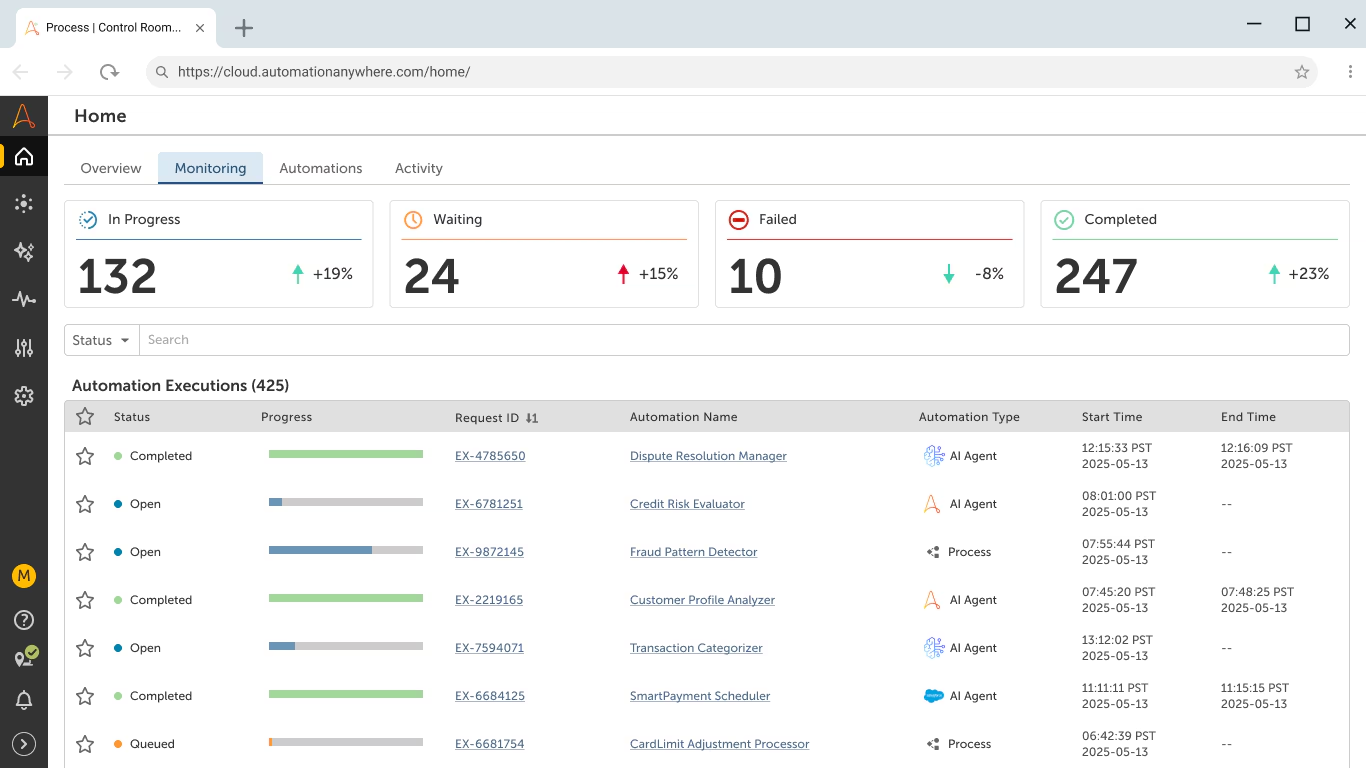
Automation Anywhere specializes in cognitive automation, integrating AI features such as natural language understanding and intelligent document processing. Its Discovery Bot enhances process mining by providing actionable insights to optimize workflows continuously.
Best for: Enterprises prioritizing advanced AI-driven automation and cognitive capabilities. Pricing is typically mid-tier, enterprise-focused, which may be less accessible for smaller organizations.
Tradeoffs:
- Variable support responsiveness and a tendency to require professional services for complex deployments.
- The platform supports hybrid cloud deployments with elastic scaling and maintains industry-standard security certifications.
- Organizations should be prepared to invest in expert resources to fully leverage its advanced features.
3. Appian RPA
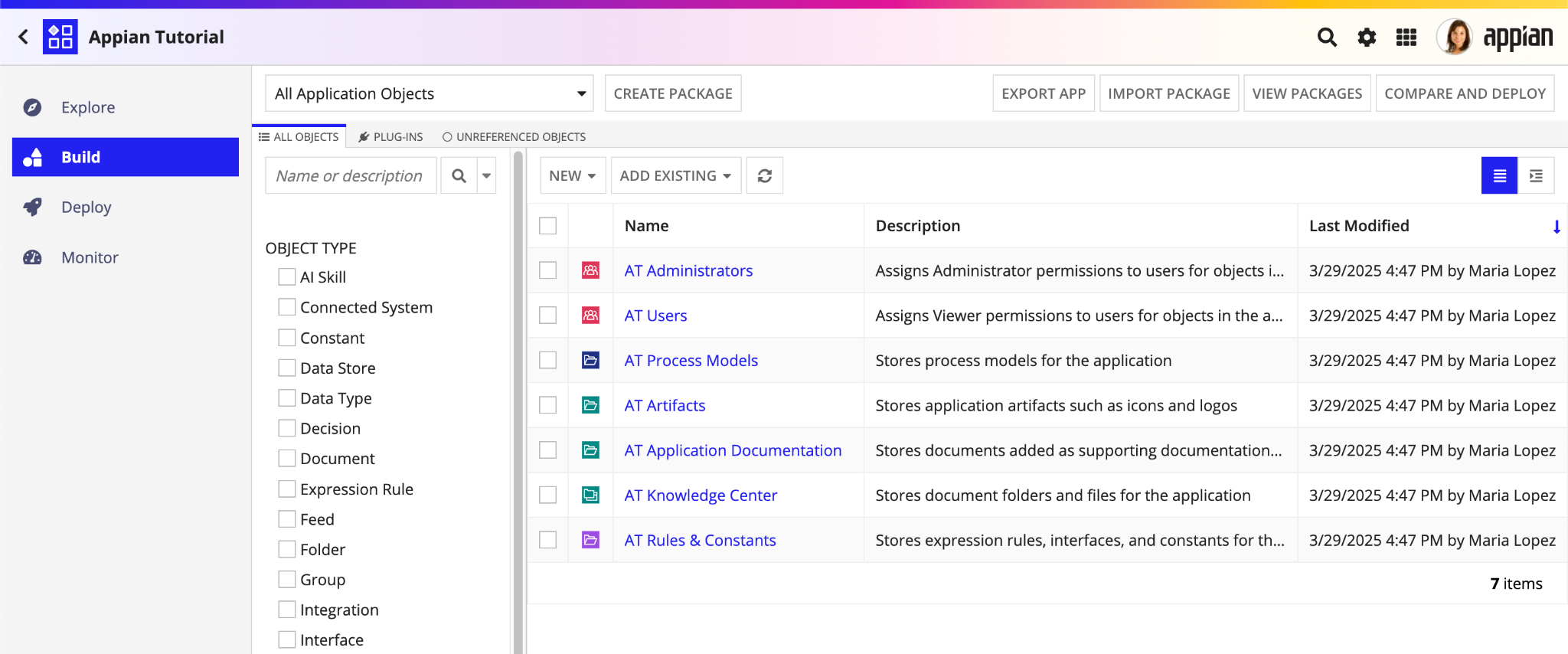
Appian combines low-code application development with integrated RPA and process mining, enabling orchestration of bots alongside human workflows within a unified business process management platform. Its process intelligence capabilities facilitate continuous operational optimization.
Best for: Businesses seeking an end-to-end BPM platform that integrates automation and AI. Pricing follows a transparent subscription model, varying by usage and enterprise scale.
Tradeoffs:
- Less mature RPA features compared to specialized vendors, which may not suffice for organizations requiring high-volume bot automation.
- Appian supports cloud deployment with scalable architecture and offers AI integration, making it ideal for those prioritizing workflow orchestration over bot-centric automation.
4. Blue Prism
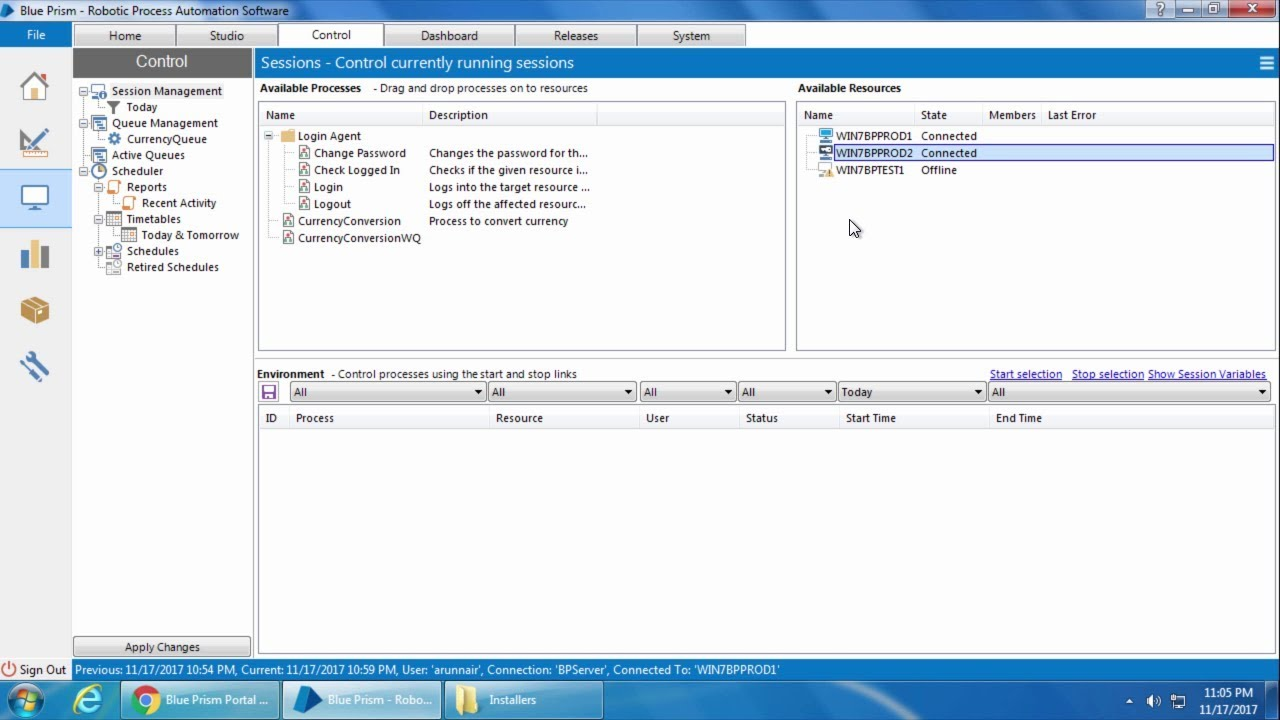
Blue Prism emphasizes secure, scalable unattended automation, favored in regulated industries such as finance and healthcare. It offers robust governance, audit trails, and compliance features aligned with stringent enterprise requirements.
Best for: Organizations with strict security and compliance needs that require reliable unattended automation at scale. Pricing is enterprise-scale and often involves custom quotes, potentially limiting accessibility for smaller teams.
Tradeoffs:
- Less advanced AI and process mining capabilities relative to competitors, and cloud-native features that lag behind leading platforms.
- Blue Prism’s mature governance makes it a strong candidate for organizations prioritizing security over rapid innovation or low-code development.
5. Emerging Agentic AI Platforms
Agentic AI platforms represent an emerging category focused on autonomous, context-aware bots capable of adaptive decision-making with minimal manual orchestration. These platforms often integrate with established RPA tools rather than serve as full replacements.
In the marketing data domain, Improvado incorporates agentic capabilities within its AI Agent. Rather than focusing on generic task automation, the AI Agent operates directly on unified, governed marketing datasets. It can:
- Automate data extraction and refresh scheduling
- Generate and modify transformation logic in plain English
- Detect anomalies in spend, conversions, or schema changes
- Create derived metrics and calculated fields
- Build dashboards and reports on demand
- Recommend performance optimizations based on unified data
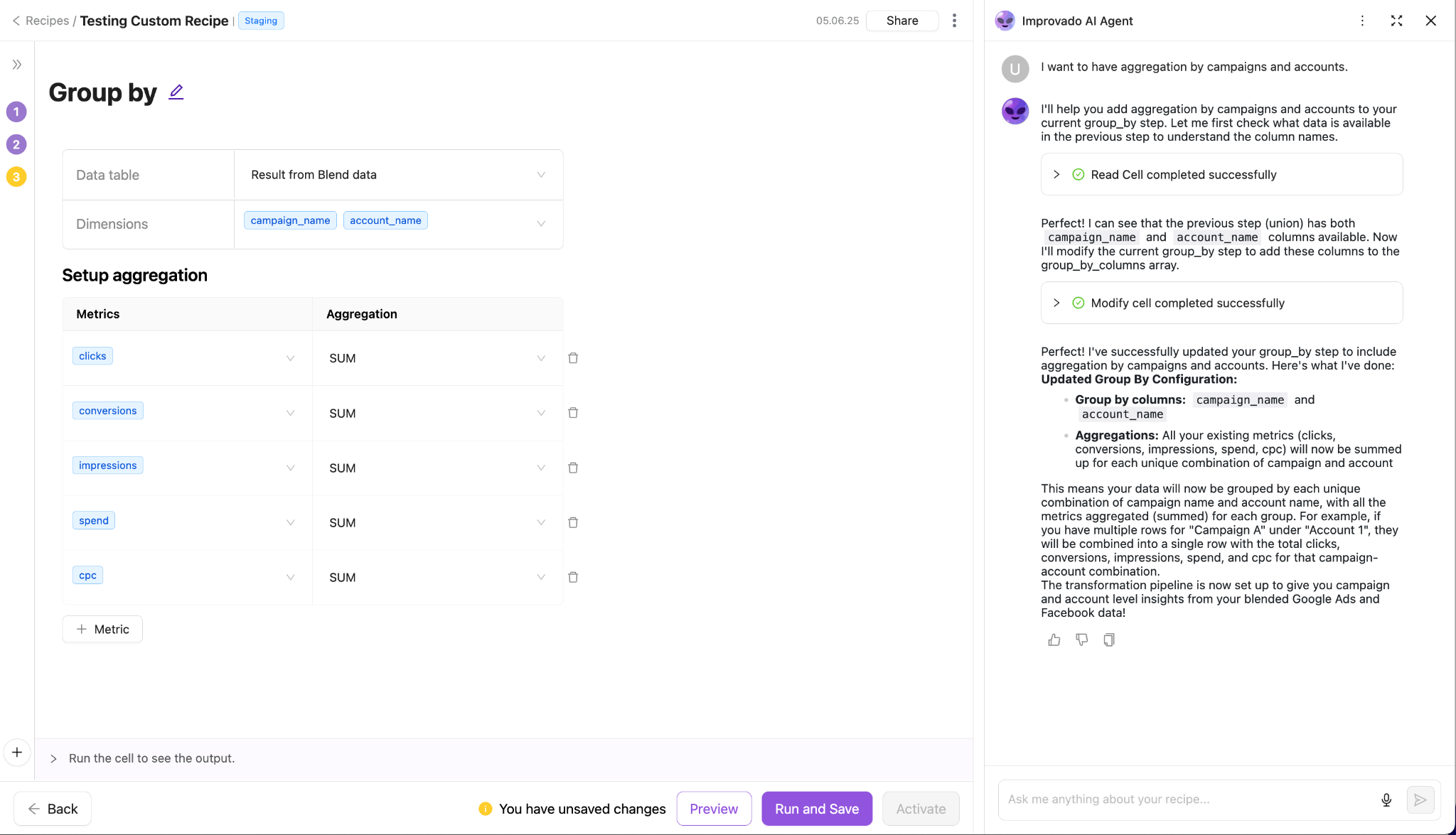
This shifts automation from static pipelines to adaptive data workflows. AI Agent reduces dependency on manual SQL scripting and engineering tickets for routine transformation and reporting tasks.
Notably, Improvado offers AI-powered marketing data integration that can complement RPA workflows but is not a direct RPA replacement. Organizations seeking purely RPA-focused tools without integrated marketing analytics may find Improvado’s offerings broader than necessary.
Best for: Organizations exploring cutting-edge automation scenarios requiring adaptive, autonomous agents. Pricing varies widely and often involves pilot projects with higher implementation risks.
Tradeoffs:
- Immature governance models, limited vendor support, and increased complexity.
- While promising, agentic AI platforms currently carry risks and are recommended only for organizations with advanced automation maturity willing to pilot experimental technologies.
Decision Framework: How to Choose the Right UiPath Alternative in 2026
This decision framework aligns platform strengths with organizational priorities and maturity:
- If your organization relies heavily on Microsoft technologies and requires seamless cloud scalability, Microsoft Power Automate is the preferred choice.
- For advanced AI-driven automation with cognitive and document processing features, consider Automation Anywhere.
- If integrated low-code application development and process orchestration are priorities, Appian offers a compelling platform.
- When security, compliance, and unattended automation at scale are paramount, Blue Prism is advisable.
- For exploratory or adaptive workflows leveraging autonomous agents, consider emerging agentic AI platforms, but proceed cautiously.
- If budget constraints are significant, evaluate pricing models carefully; Microsoft and Automation Anywhere generally provide more flexible options.
- For organizations new to RPA, prioritize platforms with strong vendor support and active communities, such as UiPath or Power Automate.
Use this framework as a starting point and validate fit through vendor demos and pilot projects.
Migration Guide: Switching from UiPath to Another RPA Platform
Migrating from UiPath requires careful planning to minimize risks and ensure continuity. The process typically follows these phases:
- Assessment: Inventory existing UiPath bots, workflows, and integrations. Identify critical processes and dependencies.
- Planning: Define scope, timeline, resources, and rollback strategies to mitigate risks.
- Pilot migration: Migrate a subset of workflows to test functionality and train end-users. Refine processes based on feedback.
- Full migration: Gradually transition remaining bots, monitoring performance and issues closely.
- Testing and monitoring: Implement automated tests and alerts to detect failures or performance degradation early.
- Governance updates: Revise security policies, access controls, and compliance documentation to reflect the new platform.
- Training and change management: Provide targeted training and communication to facilitate user adoption and ease the transition.
Typical migration timelines range from 3 to 6 months depending on complexity.
Common risks include workflow incompatibility, data inconsistencies, and user resistance. Mitigation requires thorough documentation, phased rollout, and ongoing stakeholder engagement.
Real-World Implementation Tips & Pitfalls to Avoid
Maximizing RPA benefits extends beyond technology selection. Key recommendations include:
- Align automation initiatives with clear business goals, focusing on processes that deliver measurable efficiency or customer experience improvements.
- Establish strong governance with policies for bot deployment, access control, and audit logging to mitigate compliance risks.
- Prevent bot sprawl by consolidating automations to reduce maintenance overhead and complexity.
- Leverage process mining continuously for ongoing workflow optimization rather than one-time discovery.
- Adopt continuous improvement practices by monitoring bot performance, gathering user feedback, and iterating workflows to adapt to evolving needs.
Common pitfalls include underestimating change management efforts, neglecting security protocols, and overcomplicating workflows.
Methodology: What We Evaluated and How We Selected Competitors
Our evaluation focuses on RPA platforms with substantial market presence, innovation in AI and process mining, and verified enterprise adoption as of early 2026. Data sources include:
- Industry analyst reports from Gartner and Forrester.
- Vendor documentation and publicly available pricing information.
- Verified user reviews and case studies.
- Product demos and feature roadmaps where accessible.
Limitations of this analysis include the lack of direct access to all pricing tiers and firsthand platform testing. Scores and comparisons rely on publicly available information and should be validated with vendors based on your specific organizational context.
Our objective is to provide a transparent, unbiased comparison to assist informed decision-making.
Conclusion and Next Steps
Selecting the right RPA platform in 2026 requires balancing automation capabilities, intelligence features, scalability, cost, and vendor support. While UiPath remains a key player, competitors offer differentiated strengths that may better suit specific organizational contexts.
Use the decision framework and scoring rubric presented here to conduct a systematic evaluation. Engage vendors for demos and pilots to validate fit. Consider complementary solutions carefully based on your automation and data integration needs.
Related reading: WorkFusion vs UiPath: Which RPA Platform Is Right for You?