

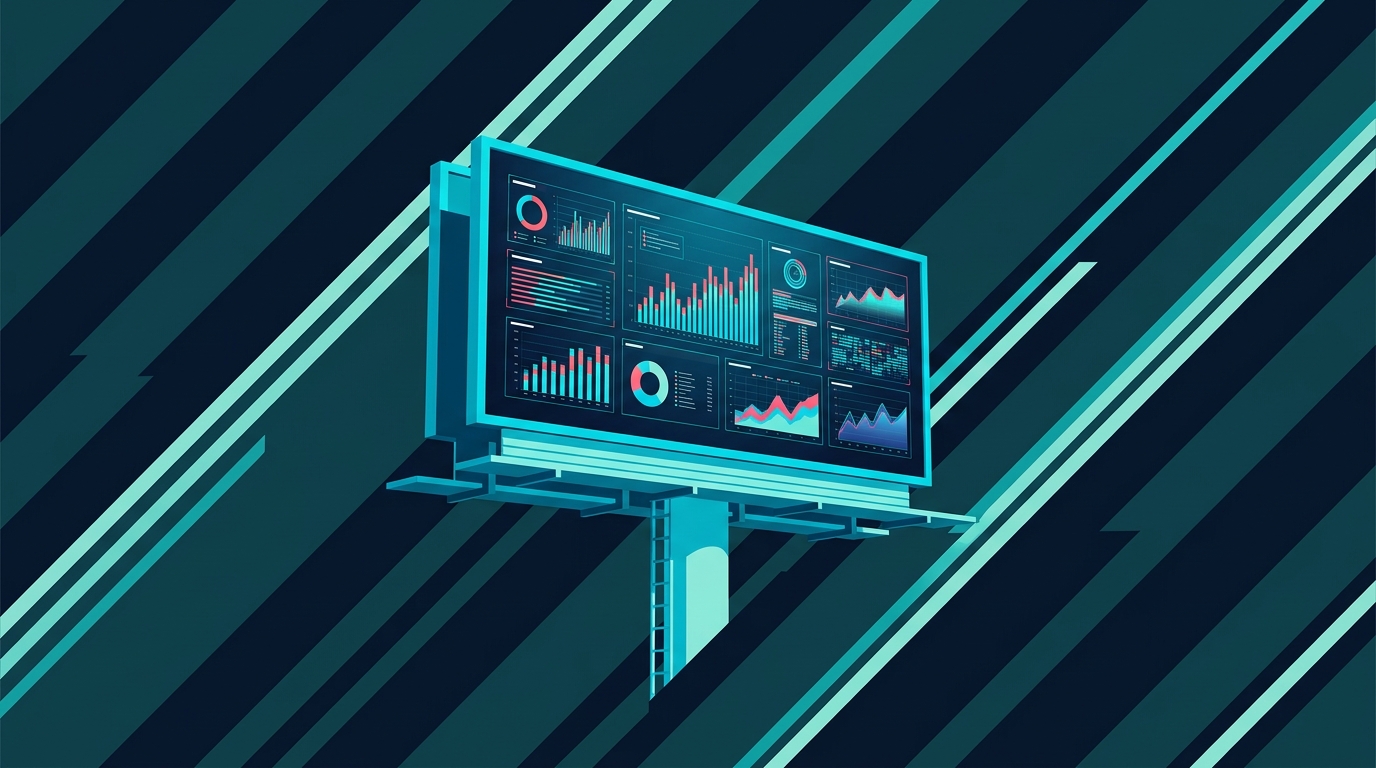
Digital billboards in Times Square adjust creative every 15 minutes based on weather and foot traffic. That's DOOH—digital out-of-home advertising—where screens replace static posters and campaigns respond to real-time data.
For performance marketers, DOOH creates a measurement challenge. Unlike Google Ads or Meta, DOOH doesn't feed clicks into your attribution model. Screens don't track user IDs. Yet global DOOH investments are on pace to top $50 billion by 2026, and executives expect ROI proof.
This guide explains how DOOH works, how it differs from traditional OOH, and how to connect DOOH performance data to your existing marketing stack. You'll learn the technical mechanics, programmatic buying workflows, and attribution frameworks performance teams use to tie outdoor impressions to downstream conversions.
How DOOH Works
DOOH operates on a supply-side infrastructure of networked screens owned by media companies (Clear Channel, JCDecaux, Outfront Media). Each screen connects to a content management system that schedules which creative plays when.
Core technical components:
• Digital display network: Screens deployed in specific venues—roadside billboards, subway platforms, retail locations. Each screen has a unique inventory ID and technical spec (resolution, aspect ratio, audio capability).
• Content management system (CMS): Controls what plays on each screen. Advertisers upload creative assets (video, static images, HTML5), set flight dates, and define dayparting rules.
• Proof-of-play verification: Sensors or log files confirm ad delivery. This data feeds impression counts and compliance reports.
• Programmatic exchange integration: Modern DOOH networks connect to demand-side platforms (DSPs) via OpenRTB protocols. Advertisers bid on impressions in real-time, the same way they buy display or video ads online.
Programmatic DOOH workflow:
1. Advertiser defines audience parameters in a DSP (e.g., "adults 25–54 within 1 mile of a retail location").
2. The DSP queries DOOH supply-side platforms (SSPs) for available inventory matching those criteria.
3. Auction occurs. Winning bid gets the screen slot.
4. Creative serves. Proof-of-play data confirms delivery.
5. Attribution partners (Foursquare, PlaceIQ, Cuebiq) use mobile location data to measure foot traffic lift near the screen.
This shift to programmatic buying is accelerating. The programmatic DOOH platform market rose from $5.84 billion in 2025 to $6.83 billion in 2026, reflecting a 17% year-over-year growth rate.
DOOH vs. Traditional OOH: Key Differences
Traditional OOH and DOOH both occupy public spaces, but the operational and measurement models diverge sharply.
| Dimension | Traditional OOH | DOOH |
|---|---|---|
| Creative flexibility | Static print—requires physical production and installation. Swapping creative takes days and incurs production costs. | Digital assets update instantly. A/B test creative, rotate messages by time of day, or trigger content based on weather/events. |
| Buying model | Direct insertion orders with media owners. Long lead times (4–6 weeks). Pricing based on location, size, and duration. | Programmatic auctions or direct API integrations. Book inventory hours in advance. Dynamic pricing based on demand and audience data. |
| Measurement | Traffic counts and demographic estimates (e.g., Nielsen DMA data). Attribution relies on brand lift surveys or promo code redemption. | Proof-of-play logs, mobile location data, and attribution integrations. Measure foot traffic, website visits, and app installs tied to exposure. |
| Targeting | Geographic only—you pick the location, but you reach everyone who passes. | Audience-based—use first-party data, DMPs, or location intelligence to serve ads when your target demo is near the screen. |
| Cost structure | Fixed CPM or flat rate per location per period. No variable costs beyond production. | Programmatic CPMs vary by demand. Premium inventory (high-traffic airports, urban cores) commands higher rates. |
Traditional static OOH formats retain approximately 65–70% market share in the U.S., but DOOH's share grows as advertisers demand measurability and the infrastructure matures.
Why DOOH Matters for Performance Marketing Managers
Performance marketers traditionally avoid channels without last-click attribution. DOOH challenges that assumption—it drives measurable lift, but the attribution path differs from paid search or social.
Three reasons DOOH belongs in your mix:
1. Mobile response rates validate DOOH as a performance channel.
74% of mobile device users took action on their phones after seeing a DOOH ad, including 44% who performed searches. DOOH doesn't close the sale on the screen—it triggers a search, a store visit, or an app download. Attribution partners use device IDs and location pings to connect exposure to downstream conversion events.
2. DOOH fills awareness gaps in saturated digital channels.
CPMs on Meta and Google climb every quarter. DOOH offers incremental reach, especially for local or regional campaigns where you need physical presence to drive foot traffic. Brands use DOOH to build awareness in specific DMAs, then retarget exposed users with digital ads—a strategy called "OOH-to-online" sequencing.
3. Programmatic infrastructure makes DOOH testable at smaller budgets.
You don't need a seven-figure commitment to run DOOH anymore. Programmatic platforms let you buy DOOH impressions alongside display and video, using the same DSP, the same audience segments, and the same optimization logic. Start with a $10K test, measure lift, and scale if the unit economics work.
The measurement challenge remains: DOOH data lives in vendor dashboards (Vistar, Hivestack, Broadsign), disconnected from your attribution model. Marketing teams spend hours each week exporting CSVs, normalizing impression counts, and manually correlating DOOH flights with changes in website traffic or store visits.
- →DOOH impression data sits in vendor dashboards—disconnected from your attribution model, CRM, and BI stack.
- →Attribution reports arrive days or weeks late, after campaign budgets are spent and optimization windows close.
- →Each DOOH vendor uses different field names, date formats, and impression definitions—reconciling CSVs manually takes hours per week.
- →Cross-channel attribution models underweight DOOH because it lacks click-level data, making ROI conversations impossible.
- →You can't tie DOOH exposure to downstream conversions—foot traffic, web visits, app installs—without custom engineering.
Key Components of DOOH
DOOH campaigns involve four core layers: inventory, creative, audience data, and measurement infrastructure.
1. Inventory types
DOOH inventory segments by venue, format, and dwell time—the average seconds a person spends viewing the screen.
• Roadside digital billboards: Large-format screens on highways and arterial roads. Typical dwell time: 3–7 seconds. Best for brand awareness, directional messaging ("Exit 42 – 2 miles"), and high-frequency exposure.
• Transit screens: Displays inside buses, subways, train stations, and airports. Dwell time: 30 seconds to 5 minutes. Supports longer-form content, QR codes, and interactive creative.
• Urban panels and street furniture: Kiosks, bus shelters, newsstands. Pedestrian-level placement. Dwell time: 10–30 seconds. Ideal for local businesses, retail promotions, and mobile call-to-action.
• Retail and venue screens: Displays in malls, gyms, convenience stores, and bars. Captive audiences with high dwell time. Often sold as place-based media networks (e.g., Walmart TV, gym networks).
• Programmatic vs. direct-sold inventory: Programmatic DOOH flows through SSPs and DSPs, allowing real-time bidding. Direct-sold inventory requires upfront negotiations with media owners. Programmatic offers flexibility; direct-sold often delivers better rates for long-term buys.
2. Creative formats
DOOH supports static images, video (15–30 seconds), and HTML5 interactive units. Technical specs vary by network—common resolutions include 1920×1080 (landscape), 1080×1920 (portrait), and custom aspect ratios for non-standard screens.
Best practices:
• High contrast and large text: Outdoor viewing conditions (sunlight, distance, motion) demand bold visuals. Small text and detailed imagery don't register.
• Single message per creative: Viewers have seconds to process the ad. One headline, one visual, one CTA.
• Motion and animation: Movement captures attention better than static images, especially in high-traffic areas where the screen competes with environmental stimuli.
3. Audience targeting and triggers
DOOH targeting relies on layering multiple signals:
• Location data: Serve ads on screens within a defined radius of your stores, events, or target DMAs.
• Audience segments: Integrate first-party data (CRM lists, mobile IDs) or third-party segments (DMPs) to trigger ads when your target demo is near the screen. Example: A fitness brand targets screens near gyms during morning and evening commute hours.
• Contextual triggers: Weather, time of day, local events, traffic conditions. A coffee brand shows iced coffee creative when temperature exceeds 75°F, hot coffee when it drops below 50°F.
• Retargeting and suppression: Some DOOH platforms support device ID matching—if a user saw your DOOH ad, you can retarget them with mobile or display ads, or suppress them from future DOOH exposure to control frequency.
4. Measurement and attribution infrastructure
DOOH measurement combines proof-of-play data (impressions served) with attribution signals (user behavior post-exposure).
• Impressions and reach: Calculated using traffic counts, dwell time, and visibility metrics. DOOH vendors provide impression estimates based on historical foot traffic data and anonymized mobile location pings.
• Foot traffic attribution: Partners like Foursquare and PlaceIQ measure store visit lift by comparing foot traffic among exposed vs. unexposed cohorts. They use GPS pings from mobile apps to identify users who passed the DOOH screen, then track whether those users visited the advertised location.
• Digital lift studies: Track website visits, app installs, and search query volume in the DMA where DOOH ads ran. Attribution vendors match device IDs from location data to online activity, creating a probabilistic link between DOOH exposure and digital actions.
• Brand lift surveys: Measure awareness, consideration, and purchase intent among exposed audiences. Typically run via mobile survey panels or in partnership with DOOH platforms.
How to Implement DOOH in Your Marketing Mix
Launching a DOOH campaign requires planning across media buying, creative production, audience strategy, and measurement integration.
Step 1: Define objectives and success metrics
DOOH supports multiple goals—awareness, consideration, foot traffic, and digital engagement. Your measurement framework depends on the objective.
• Awareness: Track reach, frequency, and brand lift. Use survey panels or social listening to measure sentiment and recall.
• Consideration: Measure website visits, search volume, and social media engagement in markets where DOOH runs. Compare these metrics to control markets without DOOH exposure.
• Foot traffic: Partner with attribution vendors to measure store visit lift. Requires integrating location data from your DOOH platform with your CRM or analytics stack.
• Digital actions: Track app installs, form fills, or promo code redemptions tied to DOOH flights. Use geo-fenced audiences and time-based analysis to isolate DOOH's contribution.
Step 2: Select inventory and negotiate access
Choose between programmatic and direct-sold inventory based on budget, targeting needs, and campaign duration.
• Programmatic DOOH: Use a DSP (The Trade Desk, Viant, StackAdapt) that integrates with DOOH SSPs (Vistar, Hivestack, Place Exchange). Programmatic works for short-term tests, dynamic targeting, and campaigns where you need to adjust quickly.
• Direct-sold inventory: Negotiate with media owners (Clear Channel, Lamar, JCDecaux) for specific placements. Direct deals offer better rates for long-term campaigns and guaranteed premium inventory (e.g., Times Square, LAX terminals).
Step 3: Build and deploy creative
DOOH creative production differs from digital display. Budget extra time for:
• Aspect ratio variations: Each screen network has unique specs. You'll need multiple versions of the same creative to fit landscape, portrait, and square formats.
• High-resolution assets: Large-format billboards require 4K or higher resolution to avoid pixelation. File sizes can exceed 100 MB for video creative.
• Compliance review: Some networks restrict messaging (alcohol, political ads, competitive claims). Factor in 48–72 hours for creative approval.
Upload creative to the DOOH platform's CMS, set flight dates, and configure dayparting rules (e.g., coffee ads 6–10 AM, happy hour ads 4–7 PM).
Step 4: Integrate audience data and triggers
Connect your first-party data or DMP segments to the DOOH platform. Most programmatic DOOH platforms accept:
• Device ID lists (MAIDs) for mobile retargeting
• Geo-fenced audience segments (e.g., "users who visited competitor stores in the last 30 days")
• Contextual triggers via API (weather, sports scores, stock prices)
Test trigger logic before launch. A weather-triggered campaign that serves the wrong creative due to API latency wastes impressions.
Step 5: Activate and monitor proof-of-play
Once the campaign launches, monitor proof-of-play reports daily. Check for:
• Impression delivery pacing—are you on track to hit your contracted volume?
• Screen-level performance—which locations deliver the highest reach and engagement?
• Creative rotation—are all variants serving as expected, or is one dominating?
Most DOOH platforms provide dashboards with near-real-time delivery data. Export these reports and feed them into your marketing data warehouse for cross-channel analysis.
Step 6: Measure attribution and optimize
Attribution closes the loop. Three measurement approaches:
• Geo-lift testing: Run DOOH in test markets, leave control markets dark. Compare conversion rates, store visits, or web traffic between the two groups. This method isolates DOOH's incremental impact but requires sufficient geographic separation to avoid contamination.
• Device ID matching: Attribution vendors match anonymized mobile IDs from DOOH exposure logs to your CRM, web analytics, or app events. You can see which exposed users converted and calculate cost-per-acquisition. Privacy regulations (GDPR, CCPA) limit this approach in some regions.
• Time-series analysis: Overlay DOOH flight dates on your analytics dashboard. Look for spikes in branded search, direct traffic, or store visits during and immediately after the campaign. Use regression models to estimate DOOH's contribution while controlling for other marketing activity.
Optimization follows standard performance marketing logic: shift budget to high-performing screens, update creative based on engagement signals, and adjust targeting rules to improve lift metrics.
Common Use Cases for DOOH
DOOH suits specific scenarios where physical presence, real-time targeting, or mass awareness justify the spend.
1. Retail foot traffic campaigns
Retailers use DOOH to drive store visits within a tight radius. A grocery chain runs DOOH ads on screens within 3 miles of store locations, promoting same-day deals. Creative updates dynamically—"Fresh salmon $8.99/lb today only"—and triggers during afternoon hours when shoppers plan dinner.
Attribution: Measure visit lift using mobile location data. Compare foot traffic on days with DOOH exposure vs. days without, controlling for weather and seasonality.
2. Event and launch activations
Brands launching products or hosting events use DOOH for localized awareness. A streaming service promotes a new series premiere with DOOH ads in major metro areas, timed to coincide with social media pushes and PR.
Measurement: Track app installs, website visits, and social mentions in DOOH markets. Use geo-fenced audiences to retarget exposed users with mobile ads.
3. Directional advertising
Restaurants, hotels, and attractions use roadside digital billboards to direct travelers. "Next exit: Best BBQ in Texas" with a map pin. These ads serve dynamically based on traffic conditions—if congestion slows traffic near the screen, dwell time increases, and creative can include more detail (menu items, hours, Yelp rating).
4. Contextual and real-time marketing
Brands trigger DOOH creative based on live data feeds. A sports apparel company shows "Congratulations, [Team Name]!" immediately after a playoff win. A travel brand promotes beach destinations when temperature drops below freezing.
Execution requires API integrations between the data source (weather service, sports feed) and the DOOH CMS. Latency matters—delays of more than a few minutes reduce relevance.
5. Cross-channel sequencing (DOOH-to-online)
Marketers use DOOH to build awareness, then retarget exposed users with digital ads. A user sees a DOOH ad for a car brand on their commute. That evening, they see a display ad on YouTube featuring the same vehicle, with a CTA to schedule a test drive.
This strategy requires device ID matching and DSP integrations. 47% of consumers searched for social media handles featured on OOH ads, validating DOOH's role in driving online engagement.
DOOH Data Integration Challenges
DOOH generates three data streams: impression logs, audience exposure data, and attribution signals. Each lives in a separate system.
Challenge 1: Fragmented reporting
Impression data sits in the DOOH vendor's dashboard (Vistar, Hivestack, Broadsign). Attribution data comes from a separate partner (Foursquare, PlaceIQ). Web analytics and CRM data live in your marketing data warehouse. Reconciling these sources manually takes hours per campaign.
Challenge 2: Lack of standardized metrics
DOOH vendors calculate impressions differently. Some use traffic counts calibrated by historical averages. Others use real-time mobile location data. Comparing performance across vendors requires normalizing definitions—what counts as an "opportunity to see" varies by methodology.
Challenge 3: Attribution latency
Foot traffic attribution reports arrive days or weeks after the campaign ends. By the time you see the data, the campaign window has closed. Real-time optimization requires integrating attribution APIs directly into your BI tool, which most DOOH vendors don't support out of the box.
Challenge 4: Cross-channel attribution conflicts
DOOH operates on probabilistic attribution—it infers causation from location pings and timing, not deterministic user IDs. When you layer DOOH into a multi-touch attribution model that includes paid search and social, the model may underweight DOOH because it lacks click-level data. Marketing mix modeling (MMM) handles DOOH better than last-click attribution, but MMM requires months of data and statistical expertise.
Solution approach:
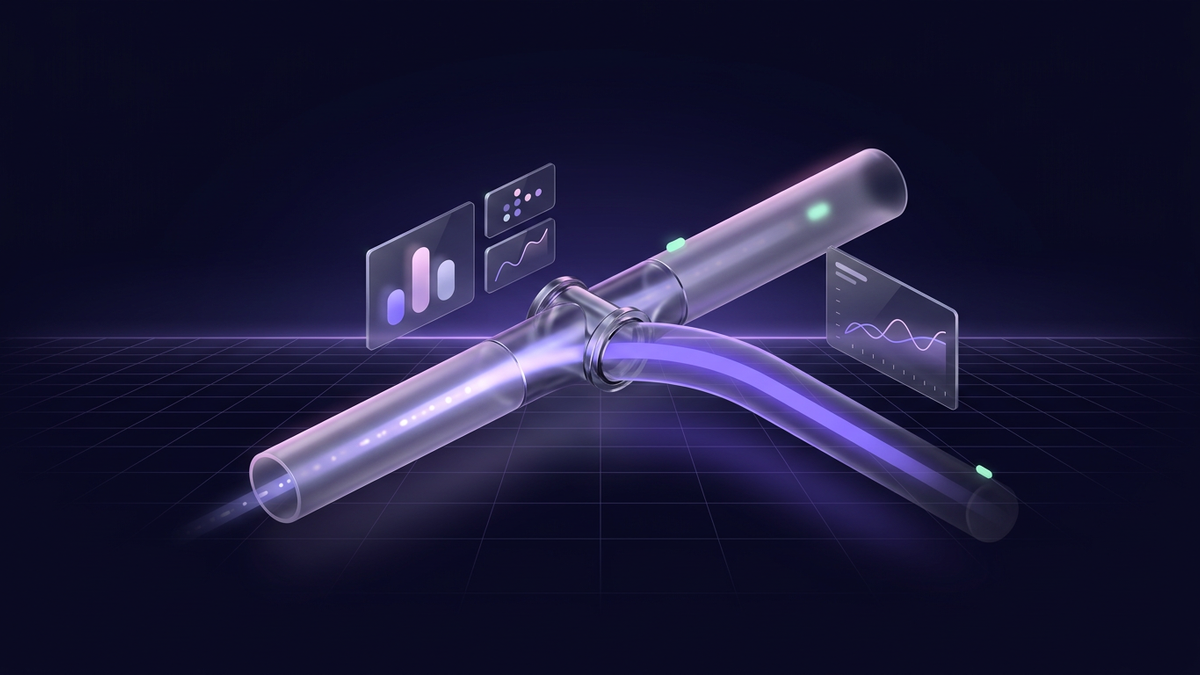
Marketing teams solve this by centralizing DOOH data in a marketing data warehouse. A typical integration workflow:
1. Extract: Pull impression logs from DOOH vendor APIs (CSV exports, REST endpoints, or SFTP drops).
2. Transform: Normalize field names, deduplicate records, and map DOOH campaigns to your internal taxonomy (campaign ID, channel, sub-channel).
3. Enrich: Join DOOH impression data with attribution partner feeds (foot traffic lift, device ID lists) and append to your marketing data model.
4. Load: Push cleaned data into your BI tool (Looker, Tableau, Power BI) or attribution platform.
This workflow runs daily or weekly, depending on campaign pacing. Teams with dozens of DOOH vendors face exponentially more complexity—each vendor has unique API endpoints, field schemas, and refresh schedules.
Selecting DOOH Platforms and Vendors
The DOOH ecosystem includes DSPs, SSPs, attribution partners, and media owners. Choosing the right stack depends on campaign goals, budget, and technical capabilities.
| Platform Type | What It Does | Examples | Best For |
|---|---|---|---|
| DOOH DSPs | Programmatic buying interface—manage bids, audience targeting, and budgets across multiple DOOH networks from one dashboard. | Vistar Media, Hivestack, Broadsign Reach, Place Exchange | Marketers who want centralized control, real-time bidding, and cross-network campaigns. |
| DOOH SSPs | Aggregate inventory from media owners and connect it to DSPs for programmatic transactions. | Vistar, Place Exchange, Hivestack | Publishers and media owners monetizing their screen networks programmatically. |
| Attribution partners | Measure foot traffic lift, brand lift, and digital engagement tied to DOOH exposure. | Foursquare, PlaceIQ, Cuebiq, GroundTruth | Campaigns where ROI depends on proving incremental lift in store visits or conversions. |
| Media owners (direct) | Own and operate screen networks—billboards, transit, retail, airports. Sell inventory directly or via programmatic channels. | Clear Channel Outdoor, Lamar Advertising, JCDecaux, Outfront Media | Long-term buys, premium placements, or campaigns in specific DMAs where you need guaranteed inventory. |
| Integrated DSPs | Multi-channel DSPs that include DOOH alongside display, video, CTV, and audio. Single interface for cross-channel campaigns. | The Trade Desk, Viant, StackAdapt, Basis Technologies | Performance marketers who want to manage DOOH in the same workflow as digital channels. |
Evaluation criteria:
• Inventory coverage: Does the platform access the screens you need? Urban panels vs. roadside billboards vs. transit vs. retail?
• Audience targeting capabilities: Can you layer first-party data, DMP segments, or contextual triggers? Does the platform support geo-fencing and device ID matching?
• Measurement integrations: Does it connect to attribution partners natively, or do you need to build custom integrations?
• Minimum spend: Programmatic DOOH platforms often require $10K–$50K minimum monthly commitments. Direct-sold inventory can start lower for local campaigns but scales up for premium placements.
• Reporting and data access: Does the vendor provide API access to impression logs and attribution data, or only dashboard exports? Real-time reporting vs. batch updates?
Marketing teams managing multiple DOOH vendors face an integration tax—each vendor's API, data schema, and reporting cadence differs. Centralizing these feeds into a unified data model requires either custom ETL pipelines or a marketing data integration platform.
DOOH Market Trends in 2026
DOOH's share of total OOH spend grows as infrastructure matures and measurement improves. Several trends shape the market in 2026.
1. Programmatic adoption accelerates
Programmatic DOOH spending is projected to reach $12.88 billion by 2030, up from $6.83 billion in 2026. Advertisers demand the same targeting, optimization, and measurement controls they use in digital channels. Media owners respond by opening their inventory to programmatic exchanges.
This shift benefits performance marketers—lower minimums, shorter commitment windows, and better attribution integrations. It also commoditizes premium inventory, as auction dynamics replace fixed-rate negotiations.
2. DOOH-to-mobile retargeting becomes standard
Device ID matching enables DOOH-exposed audiences to receive follow-up ads on mobile, display, and CTV. This closes the loop between outdoor exposure and online conversion, making DOOH measurable in the same attribution models as digital channels.
Privacy regulations complicate this—GDPR and CCPA restrict device ID sharing in some regions. Advertisers adapt by using contextual targeting and geo-fenced audiences instead of individual-level matching.
3. Retail media networks expand into DOOH
Retailers monetize in-store screen networks as DOOH inventory. Walmart, Target, and grocery chains sell screen time to CPG brands, offering closed-loop attribution (screen exposure → purchase data from loyalty programs). This model appeals to performance marketers because it ties DOOH directly to sales lift, not probabilistic foot traffic estimates.
4. Dynamic creative optimization (DCO) gains traction
DOOH platforms adopt DCO—the same technology used in display advertising—to serve personalized creative based on audience, context, and performance signals. A car brand shows different models depending on the viewer's income bracket (inferred from census data for the screen's location). A QSR brand updates menu items based on time of day and local weather.
DCO requires integrating DOOH CMSs with data feeds and decisioning engines, increasing technical complexity but improving relevance and performance.
5. Measurement standardization efforts
Industry groups (Out of Home Advertising Association of America, Interactive Advertising Bureau) push for standardized metrics—reach, frequency, viewable impressions—to make DOOH comparable to digital channels. Progress is slow, but consensus on definitions would reduce the integration burden for marketers managing multi-vendor campaigns.
Conclusion
DOOH transforms outdoor advertising from static placements into a data-driven, programmatic channel. For performance marketers, the opportunity lies in combining DOOH's mass reach with the targeting and measurement infrastructure developed for digital campaigns.
The technical challenge is integration. DOOH data lives in vendor-specific dashboards, attribution signals come from separate partners, and reconciling these sources with your existing marketing stack requires custom pipelines. Teams that solve this—centralizing DOOH impression logs, attribution data, and cross-channel performance metrics in a unified warehouse—gain the visibility needed to optimize DOOH alongside paid search, social, and display.
DOOH's growth trajectory is clear. By 2029, DOOH will represent 42.3% of all OOH ad spend. Performance marketers who build the measurement infrastructure now position themselves to scale DOOH efficiently as programmatic adoption and attribution capabilities mature.
Frequently Asked Questions
What does DOOH stand for?
DOOH stands for digital out-of-home advertising. It refers to advertising displayed on digital screens in public spaces—billboards, transit shelters, malls, airports, and street furniture. Unlike traditional static OOH, DOOH content updates dynamically and supports programmatic buying, audience targeting, and real-time measurement.
How is DOOH different from traditional OOH?
Traditional OOH uses static printed posters installed on billboards or transit shelters. DOOH uses digital screens that display video or animated content. DOOH allows instant creative updates, programmatic buying, audience targeting based on location or contextual data, and integration with attribution platforms to measure lift. Traditional OOH requires physical production and offers limited measurement beyond traffic counts and brand surveys.
How do you measure DOOH campaign performance?
DOOH measurement combines impression logs (proof-of-play data from screens) with attribution signals from mobile location data, website analytics, and store visit tracking. Attribution partners like Foursquare and PlaceIQ measure foot traffic lift by comparing exposed vs. unexposed cohorts. Digital lift studies track website visits, app installs, and search volume in markets where DOOH runs. Brand lift surveys measure awareness and consideration among exposed audiences.
What is programmatic DOOH?
Programmatic DOOH refers to buying and selling DOOH inventory through automated auctions, similar to programmatic display or video advertising. Advertisers use demand-side platforms (DSPs) to bid on impressions in real-time, targeting specific audiences, locations, or contextual triggers. Programmatic DOOH offers flexibility, lower minimums, and faster campaign activation compared to traditional direct-sold inventory.
How much does DOOH advertising cost?
DOOH pricing varies by location, screen size, audience reach, and buying model. Programmatic DOOH CPMs range from $5 to $50+, depending on demand and premium inventory. Direct-sold placements can cost thousands per screen per month for high-traffic locations like Times Square or major airports. Minimum spend for programmatic platforms typically starts at $10,000–$50,000 per campaign. Local or regional campaigns may start lower with direct media owner negotiations.
Can you target specific audiences with DOOH?
Yes. DOOH platforms support audience targeting using location data, first-party CRM lists, DMP segments, and contextual triggers. You can serve ads on screens near your target locations, trigger creative based on weather or time of day, or use device ID matching to reach users who match your customer profile when they pass the screen. Programmatic DOOH platforms integrate with the same data providers used in digital advertising.
What creative formats work best for DOOH?
DOOH creative should use high contrast, large text, and a single clear message. Viewers have seconds to process the ad. Static images work, but motion and animation capture attention better, especially in high-traffic areas. Video length typically ranges from 15 to 30 seconds. Aspect ratios vary by screen—common formats include 1920×1080 (landscape), 1080×1920 (portrait), and custom sizes for non-standard screens.
How do you integrate DOOH data with other marketing channels?
Integrating DOOH data requires extracting impression logs and attribution feeds from DOOH vendor APIs, normalizing field schemas, and loading the data into your marketing data warehouse or BI tool. Most DOOH platforms provide CSV exports, REST APIs, or SFTP access. Attribution partners supply foot traffic lift and device ID match data via separate feeds. Marketing teams use ETL pipelines or data integration platforms to centralize these streams alongside paid search, social, and display data for unified reporting and cross-channel attribution.