




















.jpeg)
Most advertising platforms interrupt users. They place ads between photos of friends or videos of cats. Quora is different. It's a platform built on intent. Users come with specific questions, actively seeking solutions, information, and recommendations. This unique environment makes Quora advertising a powerful tool for businesses aiming to connect with customers at the most critical stage of their buying journey.
Quora has solidified its place as a go-to resource for over 400 million monthly visitors. These aren't passive scrollers; they are researchers, decision-makers, and industry professionals. Advertising on Quora allows you to place your brand directly into these high-value conversations.
This guide provides a comprehensive roadmap to mastering Quora Ads, from initial setup and targeting to advanced optimization and measurement.
Key Takeaways:
- High-intent audience: Quora connects you with users actively researching problems and solutions, leading to higher conversion rates compared to passive social platforms.
- Context is king: Quora's strength lies in contextual targeting. You can place your ads on specific questions, topics, or keywords relevant to your business.
- Diverse ad formats: From native Text Ads and Promoted Answers to visual Image Ads and Lead Gen Forms, Quora offers multiple ways to engage your target audience.
- Cost-effective channel: Quora often provides lower CPCs and less competition than saturated platforms like Google or LinkedIn, delivering a strong return on ad spend.
- Measurement is crucial: To truly understand performance, you must go beyond Quora's native analytics and integrate its data into a unified marketing dashboard.
Why Advertise on Quora? The Untapped Potential for B2B & B2C
Many marketers overlook Quora, focusing their budgets on more traditional platforms. This is a significant mistake. Quora offers unique advantages that can drive highly qualified traffic and leads for both B2B and B2C brands. It's a platform where curiosity meets commerce.
Reaching High-Intent Users at the Point of Consideration
Think about the user journey. Someone searching "best CRM for small business" on Quora is not just browsing. They have a problem and are actively evaluating solutions. Placing your ad on that question page puts your brand in front of a user who is ready to buy.
This is fundamentally different from showing an ad to someone based on a past interest. It's real-time, intent-based marketing.
Lower CPCs and Less Competition
Because it's less saturated than Google Ads or LinkedIn Ads, Quora often delivers more efficient results.
The cost-per-click (CPC) can be significantly lower, especially in competitive niches. In some cases, Quora CPC is 65% lower than CPC of a similar Google search campaign and 40-50% lower than Meta CPC. This allows advertisers to stretch their budgets further and achieve a better return on ad spend (ROAS).
The minimum bid per click starts at just $0.01, making it accessible for businesses of all sizes.
Building Authority and Thought Leadership
Quora isn't just an ad platform, it's a knowledge hub. By using Promoted Answers, your brand can provide genuine value by answering a user's question thoughtfully.
This positions your company as a helpful expert, not just a seller. This trust and authority can lead to long-term brand loyalty and organic discovery long after the ad campaign ends.
The Power of Contextual Relevance
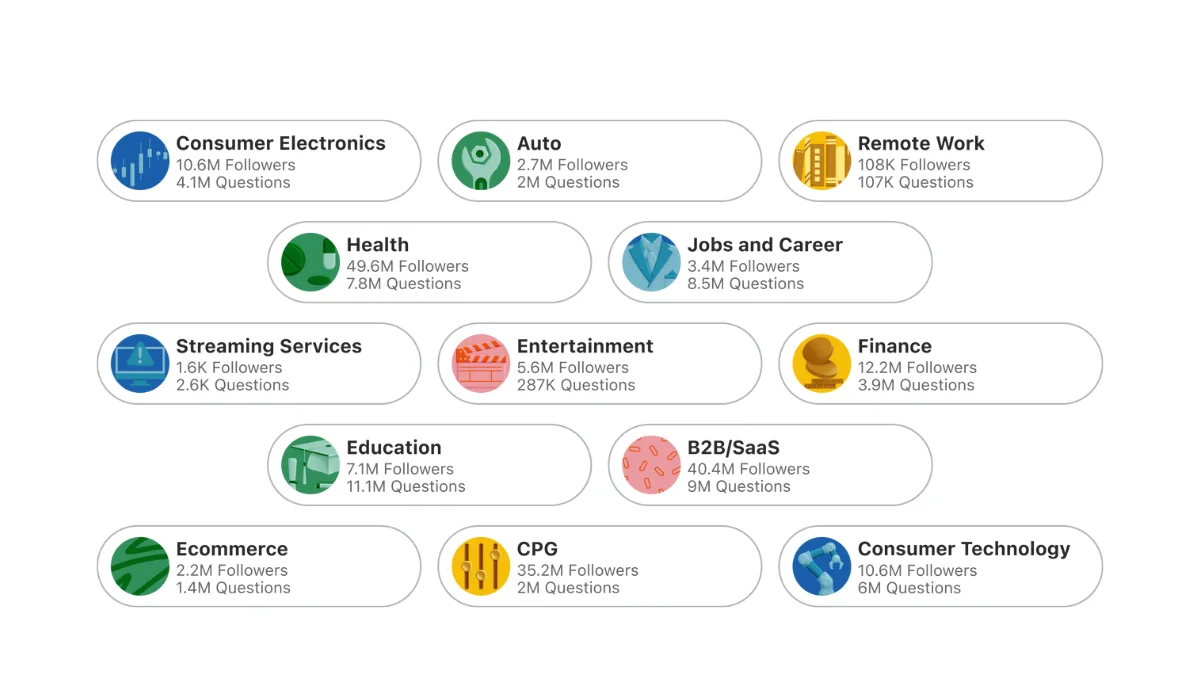
Quora boasts over 300,000 topics, ranging from technology and science to arts and personal development. Your ad appears alongside content that is directly related to your product or service.
This contextual alignment creates a seamless user experience. The ad feels less like an interruption and more like a helpful recommendation. This relevance boosts click-through rates and ensures you're connecting with an audience that is already engaged with your subject matter.
Understanding the Quora Audience
To succeed with Quora ads, you must first understand who uses the platform. The audience is diverse, educated, and influential. They are information-seekers who value credibility and in-depth answers.
Demographics: Beyond the Stereotypes
The Quora user base is not a monolith. While it skews towards being highly educated with significant household income, it spans all ages and professions.
A large percentage of users are in their prime earning and spending years (25-44). Many hold decision-making positions in their companies, making Quora a goldmine for B2B marketers. The global reach is also immense, with strong user bases in the US, India, and the UK.
Psychographics: A Mindset of Research and Discovery
What unites Quora users is their mindset. They are curious, analytical, and purpose-driven. They visit the site to learn something new, solve a problem, or inform a purchase decision.
They are less susceptible to flashy, low-substance advertising and respond better to ads that are informative, helpful, and transparent. They are actively in a learning mode, which makes them highly receptive to new ideas and solutions.
User Behavior: Active Questioning vs. Passive Scrolling
Behavior on Quora is fundamentally different from other social networks. Users don't endlessly scroll through a feed of random content. They search for specific topics, follow experts, and read long-form answers. This active, focused engagement means they pay more attention to the content on the page, including well-placed ads.
An ad on Quora is part of a user's research process, not a distraction from it.
The Complete Guide to Quora Ad Formats
Quora offers a versatile suite of ad formats designed to integrate natively into the user experience. Choosing the right format depends on your campaign goal, whether it's driving awareness, generating leads, or promoting content.
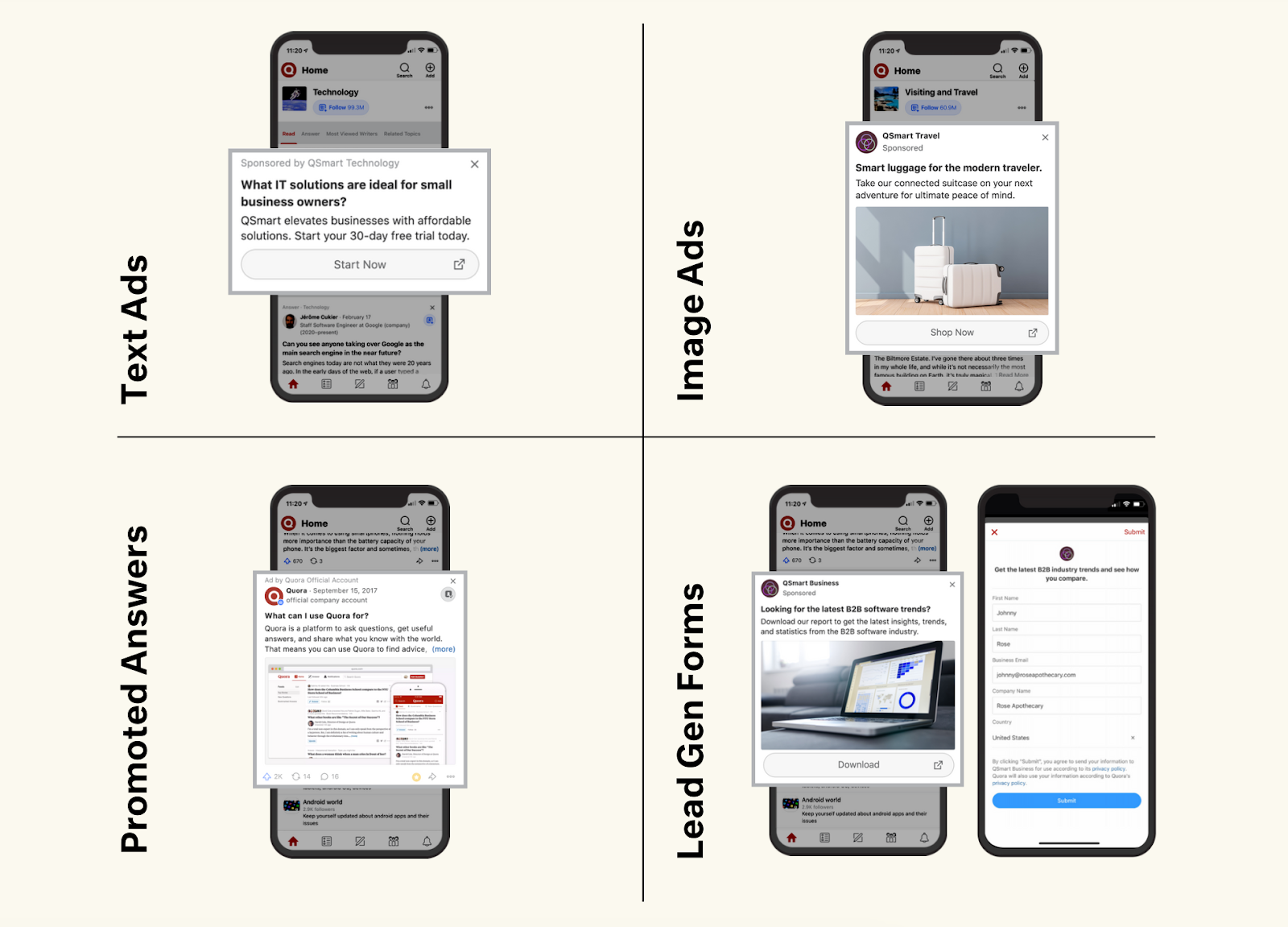
Image Ads: Capturing Attention in the Feed
Image ads are the most standard format. They appear in the user's feed and on question pages, combining a compelling image with a headline and description text. These are ideal for showcasing a product, building brand awareness, and driving traffic to a landing page. The visual element helps your ad stand out and quickly convey your value proposition.
Text Ads: Native and Non-Disruptive
Text ads are simple, headline-and-description ads that blend seamlessly with the Quora interface. Their native appearance makes them feel less like an advertisement, which can lead to higher click-through rates from skeptical audiences.
They are perfect for direct-response campaigns where a clear, concise message is key.
Promoted Answers: The Ultimate Content Marketing Play
This is Quora's most unique and powerful ad format. You can write a detailed, helpful answer to a relevant question and then pay to promote it to a wider audience.
This format is not a direct sales pitch. Instead, it establishes your brand as an expert, builds trust, and can include a subtle call-to-action or link at the end. It's the perfect top-of-funnel strategy.
Lead Gen Forms: Seamless In-Platform Conversions
Quora's Lead Gen Forms allow users to submit their information (like name and email) without ever leaving the platform. By removing the friction of visiting a separate landing page, these ads dramatically increase conversion rates for lead generation campaigns.
This is ideal for webinar sign-ups, ebook downloads, or demo requests.
Mastering Quora Ads Targeting Options
Quora's targeting capabilities are what make the platform so effective. You can move beyond broad demographics and reach users based on the specific topics and questions they are actively engaging with. This precision ensures your ad spend is highly efficient.
Contextual Targeting (Keywords, Questions, Topics)
This is the core of Quora advertising.
- Topic Targeting: Show your ads to people reading questions within specific topics (e.g., "Software as a Service (SaaS)").
- Keyword Targeting: Target pages that contain specific keywords in the question, just like search advertising.
- Question Targeting: Hand-pick the exact URLs of questions where you want your ad to appear for maximum relevance.
Audience Targeting (Website Traffic, Lookalikes, Lists)
This allows you to leverage your own data.
- Website Traffic: Retarget visitors who have been to your website by installing the Quora Pixel.
- Lookalike Audiences: Find new users on Quora who are similar to your existing website visitors or customer lists.
- List Match: Upload a list of customer or lead email addresses to target them directly on Quora.
Behavioral Targeting (Interests, Question History)
Target users based on their past behavior on the platform. You can reach people who have shown interest in certain topics or have recently viewed specific types of questions, even if they aren't currently on a relevant page. This is great for broader reach campaigns.
Demographic Targeting (Location, Device)
Quora also offers standard demographic targeting options. You can narrow your audience by geographic location (country, state, city), the device they are using (desktop or mobile), and browser. This is useful for layering on top of contextual or behavioral targeting for added precision.
Setting Up Your First Quora Ads Campaign (Step-by-Step)
Launching a campaign on Quora is straightforward. The Quora Ads Manager provides an intuitive interface to guide you through the process. Follow these steps to get your first ad live.
- Create your Quora Ads Manager Account: If you have a Quora profile, you can easily create an ad account at quora.com/business. You'll need to enter your business and payment information.
- Install the Quora pixel: This is a critical step. Place the Quora Pixel code on your website to track conversions and build website traffic audiences for retargeting. Without it, you can't measure the true success of your campaigns.
- Define your campaign objective: When creating a new campaign, Quora will ask for your objective. Choose from options like Conversions, App Installs, Traffic, Awareness, or Lead Generation. This choice will affect your bidding options.
- Set your budget and schedule: You can set a daily budget or a lifetime budget for your campaign. You can also schedule your campaign to start immediately or at a future date. Start with a modest budget to test and learn.
- Build your ad set and targeting: An ad set is where you define your targeting. Choose your primary targeting method (Contextual, Audience, etc.) and add any demographic layers. This is the most important part of the setup process. Be specific.
- Craft your ad creative and copy: Now it's time to create your ad. Choose your ad format (Image, Text, etc.), upload your visuals, and write your headline and body copy. Make sure your message aligns with the audience you're targeting.
- Launch and monitor your campaign: After a brief review process by Quora, your ad will go live. Monitor its performance closely in the Ads Manager during the first few days. Look at metrics like CTR, CPC, and conversion rate to see what's working.
Quora Ad Specs and Creative Best Practices
Effective ads go beyond great targeting. Your creative needs to resonate with the Quora audience. Follow these best practices to maximize your ad performance.
Image and Text Ad Specifications
Ad specs can change, but generally, follow these guidelines:
- Headline: Keep it concise and question-based if possible. Around 65 characters is a sweet spot.
- Body Text: Clearly explain your value proposition. Around 105 characters is ideal.
- Image Ads: Use a 16:9 aspect ratio (e.g., 1200x628 pixels). Ensure text on the image is minimal and easy to read.
- Call-to-Action (CTA): Use a clear, action-oriented CTA like "Learn More," "Sign Up," or "Download Now."
Writing Compelling Headlines and Descriptions
Your copy should be direct and helpful. Address a pain point or ask a question that resonates with your target audience. Avoid overly promotional language.
Instead of "The #1 Best Software," try "Tired of Complicated Software? See How We Simplify It." The tone should be conversational and informative.
Choosing High-Impact Imagery
For Image Ads, use visuals that are clean, professional, and relevant. Avoid generic stock photos. Photos of people or product screenshots often perform well. Ensure your brand logo is visible but not overpowering. The image should complement the text, not distract from it.
A/B Testing Your Creative Elements
Never assume your first ad is the best possible version. Continuously test different elements. Create duplicate ads and change only one variable at a time. Test different headlines, body copy, images, and CTAs. Let the data tell you which combination performs best, then iterate.
Quora Ads vs. Other Advertising Platforms
Understanding where Quora fits into the broader digital advertising landscape is key to allocating your budget effectively. Here’s how it compares to other major platforms.
| Aspect | Quora Ads | Google Ads (Search) | LinkedIn Ads | Reddit Ads |
|---|---|---|---|---|
| Audience Intent | High (Research / Consideration) | Very High (Active Problem Solving) | Medium (Professional Networking) | Low-Medium (Community / Interest) |
| Primary Targeting | Contextual (Questions, Topics) | Keyword-Based | Professional (Job Title, Company) | Interest-Based (Subreddits) |
| Content Style | Informative, Educational | Direct, Solution-Oriented | Professional, B2B Focused | Authentic, Community-Driven |
| Typical CPC | Low to Medium | Medium to Very High | High to Very High | Low |
| Competition | Lower | Very High | High | Medium |
| Best For | Mid-funnel education, B2B/B2C consideration | Bottom-funnel lead generation | B2B lead gen, Account-Based Marketing | Top-of-funnel awareness, niche communities |
| Key Ad Format | Promoted Answers | Text Ads | Sponsored Content, InMail | Promoted Posts |
Advanced Quora Advertising Strategies
Once you've mastered the basics, you can implement more sophisticated strategies to drive even better results. These advanced tactics help you build a full-funnel marketing machine on Quora.
Full-Funnel Marketing on Quora
Don't think of Quora as just a single-touchpoint channel. Use it to engage users at every stage of the funnel.
- Use broad targeting and Promoted Answers for top-of-funnel awareness.
- Retarget users who engaged with your answers with Image Ads linking to a case study for mid-funnel consideration.
- Finally, retarget website visitors with Lead Gen Forms for bottom-funnel conversions.
Using Promoted Answers for Top-of-Funnel
The most effective way to use Promoted Answers is to find broad, high-traffic questions related to your industry's core problems. Write the most comprehensive, helpful answer on the page.
Don't sell. Educate. This builds brand equity and creates a warm audience that you can retarget with more direct offers later.
Retargeting Engaged Users for Conversions
Create custom audiences based on engagement. For example, you can create an audience of people who upvoted your Promoted Answer or visited specific pages on your site from a Quora ad. Serve these highly engaged users a more direct conversion-focused ad, like an invitation to a webinar or a free trial offer.
Scaling Successful Campaigns
When you find a winning combination of targeting and creative, don't just increase the budget. Look for ways to scale horizontally. Identify similar questions and topics to target. Create lookalike audiences from your best-converting custom audiences. Expand your keyword list. This allows you to grow your reach without sacrificing relevance and performance.
Measuring Success: Quora Ads Analytics and ROI
You can't optimize what you can't measure. While Quora Ads Manager provides basic performance data, a truly data-driven approach requires a more holistic view of your marketing efforts.
Understanding Key Metrics in Quora Ads Manager
Familiarize yourself with the core metrics available in the platform:
- Impressions: How many times your ad was shown.
- Clicks: How many times your ad was clicked.
- CTR (Click-Through Rate): The percentage of impressions that resulted in a click. A key indicator of ad relevance.
- CPC (Cost Per Click): The average amount you pay for each click.
- Conversions: The number of desired actions (e.g., sign-ups) tracked by your Quora Pixel.
- CPA (Cost Per Acquisition): How much you spend on average for each conversion.
The Importance of Conversion Tracking
Relying on clicks and CTR alone is a recipe for failure. You must have accurate conversion tracking set up via the Quora Pixel. This allows you to understand which campaigns, ad sets, and ads are actually driving business results. Without conversion data, you are optimizing in the dark.
Calculating Your True return on investment (ROI)
Your ultimate goal is to generate a positive ROI. To do this, you need to know not just your Cost Per Acquisition (CPA) but also the Lifetime Value (LTV) of the customers you acquire.
A high CPA might be perfectly acceptable if those customers have a high LTV. Tying your ad spend to actual revenue is the final step in proving value.
Integrating Quora Data with Your Full marketing data pipeline
Quora is just one piece of your marketing puzzle. To see the full picture, you need to pull your Quora performance data into a centralized system alongside data from Google Ads, Facebook Ads, your CRM, and more.
This enables comprehensive analysis and accurate attribution. When Quora lives inside the same governed pipeline as your search, social, and revenue data, you can evaluate intent-driven traffic in context, comparing cost efficiency, measuring multi-touch influence, and understanding how Quora contributes to pipeline and revenue outcomes. Fragmented channels become part of one unified performance narrative.
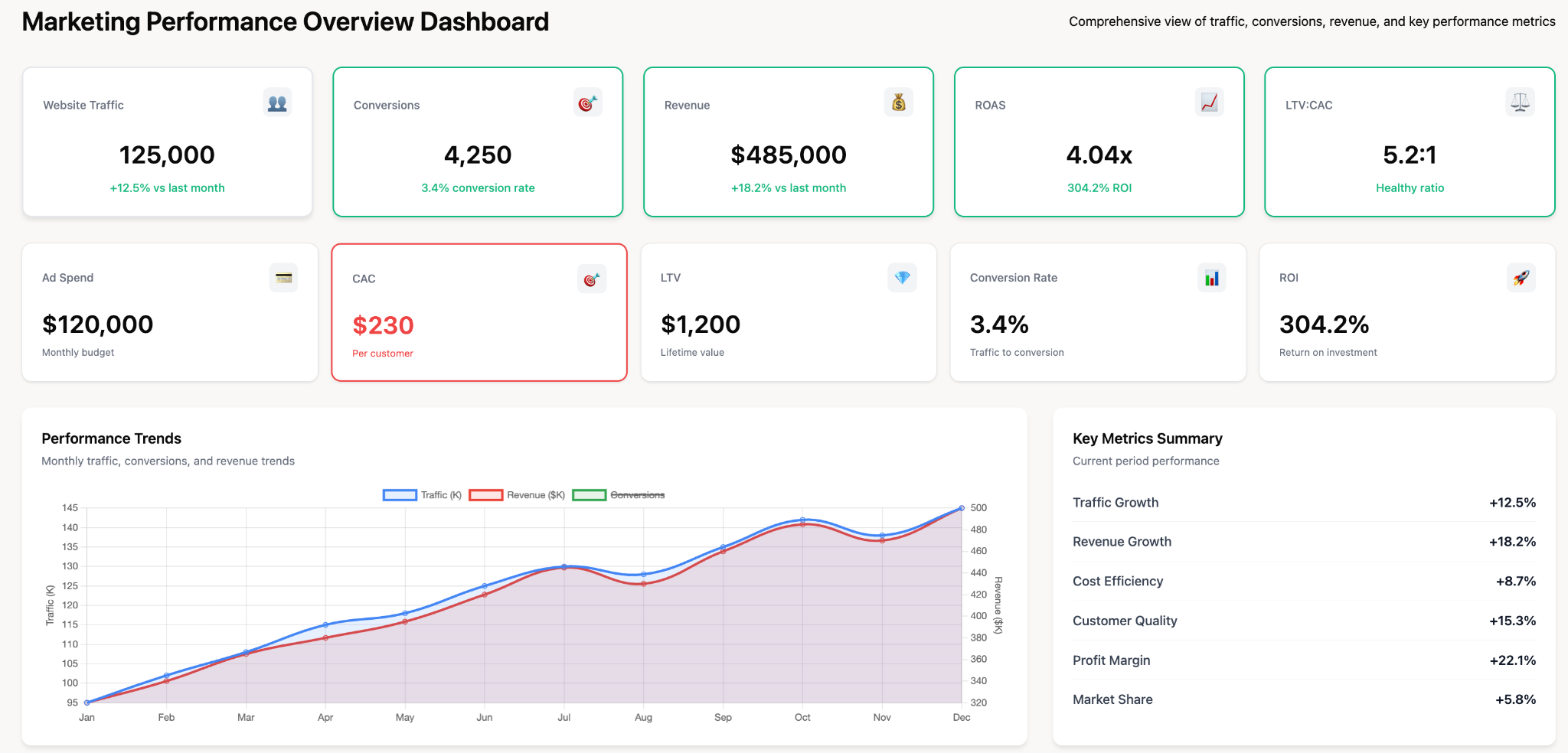
Improvado makes this integration seamless. It automatically extracts Quora Ads data, standardizes it to your marketing taxonomy, and merges it with the rest of your paid media, web analytics, and downstream conversion data.
Improvado capabilities include:
- 1,000+ pre-built connectors, including Quora Ads, Google Ads, Facebook Ads, LinkedIn, Reddit, and major CRMs.
- Unified marketing taxonomy and naming governance to standardize campaigns, ad groups, audiences, and KPIs across channels.
- Real-time data extraction and transformation, ensuring Quora metrics stay aligned with other platforms for accurate cross-channel reporting.
- Multi-touch attribution and journey mapping, enabling teams to quantify Quora’s role beyond last-click performance.
- Automated blending of spend, engagement, and revenue data, giving full visibility into CAC, ROAS, and down-funnel impact.
- AI Agent for ad-hoc analysis, allowing you to ask natural-language questions like “How does Quora compare to paid search in mid-funnel efficiency?” and get instant insights.
Optimizing Your Quora Ads for Peak Performance
Launching a campaign is just the beginning. Continuous optimization is where you turn good campaigns into great ones. This involves a cycle of analyzing data, forming hypotheses, and testing changes.
Bid and Budget Management Tips
Start with automated bidding to let Quora's algorithm find the right users. Once you have enough conversion data, you can switch to manual bidding for more control. Monitor your daily spend and reallocate budget from underperforming ad sets to your top performers. Don't be afraid to increase the budget on campaigns that are delivering a positive ROI.
Refining Your Targeting Over Time
Regularly review your targeting performance. Exclude questions or topics that are spending money but not driving conversions. Double down on the ones that work best. As you gather more data, build more sophisticated lookalike audiences based on your highest-value converters.
Improving Ad Relevance and Quality Score
A high CTR is a strong signal to Quora that your ad is relevant. This can lead to a better quality score, which in turn results in lower CPCs and better ad placement. Continuously A/B test your ad copy and creative to improve CTR. Ensure your landing page provides a great user experience and is directly related to your ad's promise.
Using marketing attribution models to understand Quora's impact
Don't rely on last-click attribution. Use more advanced attribution models (like linear or time-decay) to give proper credit to channels like Quora that often play a role early in the customer journey. This provides a more accurate understanding of Quora's true contribution to your marketing success.
Common Quora Ads Mistakes and How to Avoid Them
Many advertisers new to Quora make preventable mistakes that waste money and deliver poor results. By being aware of these common pitfalls, you can set your campaigns up for success from day one.
Mismatched Ad Copy and Landing Pages
A user clicks your ad because it promises to solve a specific problem. If your landing page doesn't immediately deliver on that promise, they will bounce. Ensure your landing page headline and content directly reflect the ad copy. The transition should feel seamless and logical.
Targeting Too Broadly or Too Narrowly
Targeting too broadly (e.g., targeting the entire "Business" topic) will waste your budget on irrelevant clicks. Targeting too narrowly (e.g., targeting only three specific questions) may not generate enough volume to be meaningful. Find the sweet spot by starting with a specific set of topics and keywords and gradually expanding as you find success.
Ignoring the Power of Promoted Answers
Many brands only run standard Image and Text ads. This is a missed opportunity. Promoted Answers are Quora's superpower. They allow you to build trust and authority in a way that no other ad format can. Dedicate a portion of your budget to testing and scaling a Promoted Answers strategy.
Failing to Automate Reporting
Manually downloading reports from Quora and combining them in spreadsheets is time-consuming and prone to errors. Leveraging reporting automation can save your team hours of work each week, freeing them up to focus on strategy and optimization rather than data entry. It is a critical component of a scalable marketing operation.
Not Refreshing Creative Assets
Ad fatigue is real. If the same audience sees your ad too many times, performance will decline. Plan to refresh your ad creative and copy every 4-6 weeks. Introduce new images, test new headlines, and keep your message fresh to maintain high engagement.
Neglecting the Overall social media analytics context
Don’t analyze Quora in a vacuum. Compare its performance against your other social and content channels. Understanding how its audience and results differ from platforms like LinkedIn or Reddit helps you define its specific role in your marketing mix and build a more cohesive strategy.
With Improvado consolidating all social, paid, and revenue data into one governed dataset, you can evaluate Quora’s contribution accurately and benchmark it against the rest of your ecosystem without manual stitching or inconsistent metrics.
Conclusion: Your Path to Quora Advertising Success
Quora Ads represent one of the most underrated opportunities in digital marketing today. It is a platform where intent, context, and engagement converge, allowing brands to connect with customers in a uniquely meaningful way. By understanding the audience, mastering the ad formats, and using precise targeting, you can drive significant business growth.
Success, however, is not just about launching campaigns. It's about a commitment to testing, learning, and optimizing. Most importantly, it's about measuring what truly matters. To unlock the full potential of your Quora advertising and every other marketing channel, you need a unified analytics strategy.
With Improvado consolidating Quora data alongside search, social, and revenue metrics into one governed framework, you gain the clarity needed to evaluate impact, compare performance across platforms, and scale with confidence. Audit Quora paid-media attribution with Improvado to get a unified view of all your marketing efforts.
“Improvado allows us to have all information in one place for quick action. We can see at a glance if we're on target with spending or if changes are needed—without having to dig into each platform individually.
On the reporting side, we saw a significant amount of time saved! Some of our data sources required lots of manipulation, and now it's automated and done very quickly. Now we save about 80% of time for the team.”