
SEMrush
Description
SEMrush is an SEO tool that does your keyword research, tracks the keyword strategy your competition uses, runs an SEO audit of your blog, looks for backlinking opportunities, and lots more.
Setup guide
Follow our setup guide to connect SEMrush to Improvado.
Click the Connections in the left navigation bar.
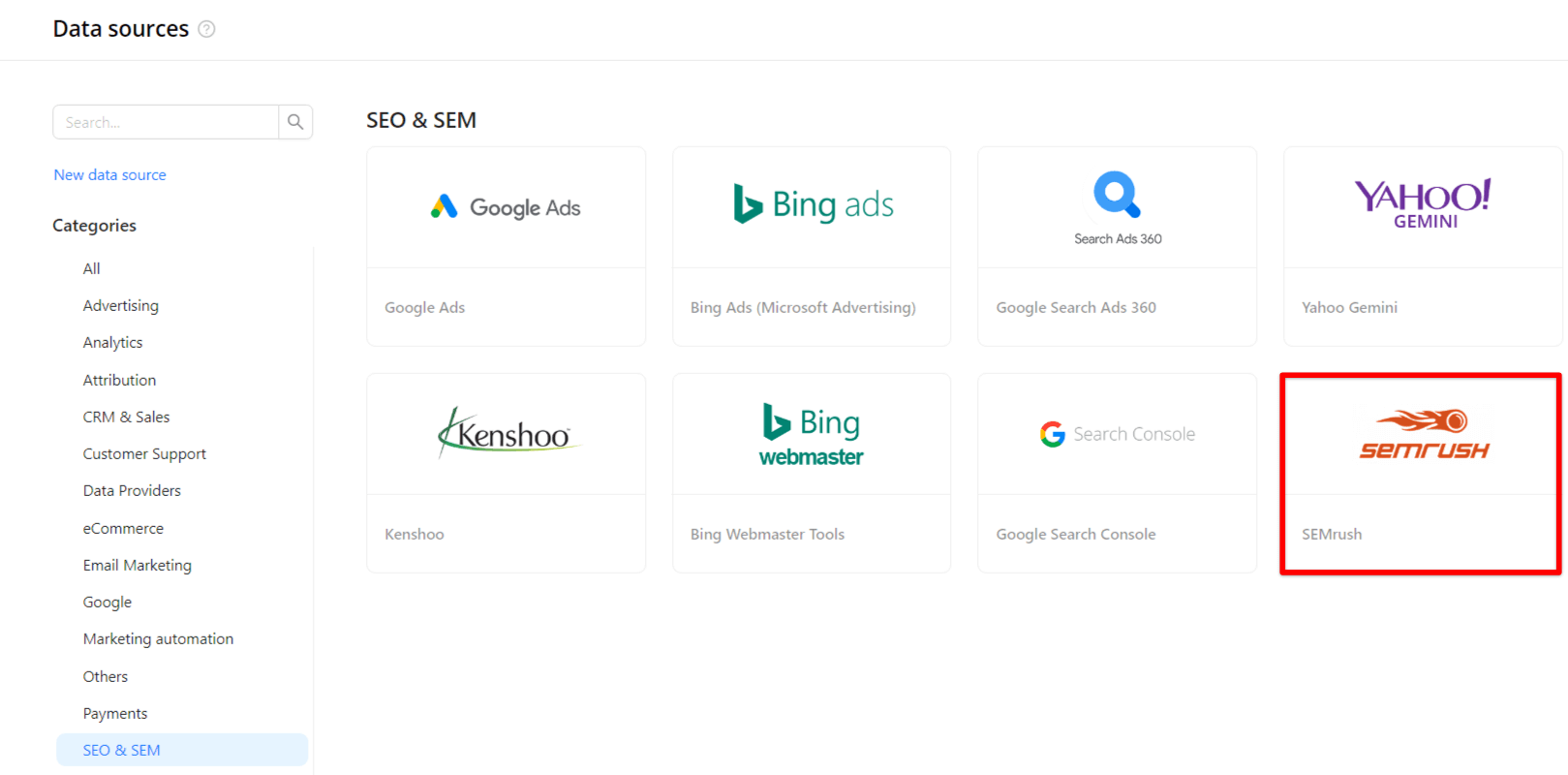
Categories on the Data sources page group all available platforms. Use a search to find the required one.
Click on the SEMrush tile.
Authorize your account. Fill in the following required fields:
- Login
- API Key
Important: You’ll receive your API Key via a Customer Support Specialist after purchasing a SEMrush subscription.
Learn more about Semrush accounts and API request units here.
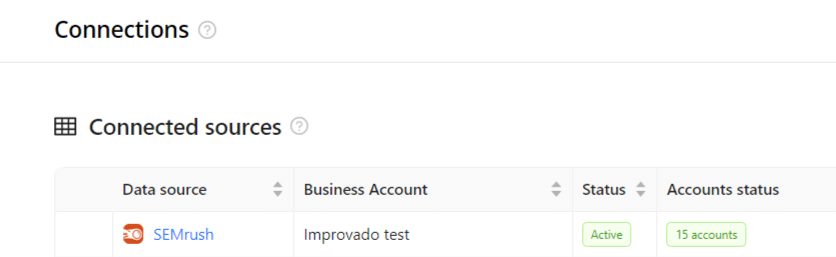
After the connection process is completed successfully, SEMrush connection will appear in your Connected sources list.
When the connection status is Active, and the account status column shows a number of accounts, you can move on to data extraction.
To extract data from the connected sources, check the instruction on how to set up data extraction.
Schema information
The schema information shows all report types you can use to extract data from SEMrush.
Limits
Monthly reports are stamped the 15th
The monthly SEMrush reports — Domain Organic Monthly, URL Organic Monthly and the Ranks Monthly family — hold one row per month, and every row is dated the 15th of its month rather than the 1st or the last day. A dashboard filtering on month boundaries, or on a rolling “last 30 days”, will place those rows in the wrong bucket or miss them entirely.
The extraction date range only has to overlap the month you want — it does not have to contain the 15th. A month that is still running is skipped, so an extraction covering only the current month returns nothing: run it once the month has closed.
Display Limit is a cost control, not a page size
SEMrush charges API units per row returned, so the number of rows requested translates directly into consumption from your SEMrush balance. The Display Limit setting exists to cap that: raising it does not merely lengthen the extraction, it increases what each run costs you at SEMrush.
The price per row is not the same for every report, and each report’s setting carries it in its own title — Display Limit (50 API units per line) on Domain Organic Monthly, Display Limit (10 API units per line) elsewhere. Read the title before raising the number.
By default rows come back highest-traffic first, so a limit keeps the head of the list and drops the tail — usually the behaviour you want, though it does mean a limited extraction is not a random sample and long-tail analysis needs a higher limit. The order is itself a setting (Display Sort): change it and the limit keeps whatever the new order puts first.
Release notes
You can find information about the latest API changes in the official Release notes.
Troubleshooting
Having trouble with your setup? Find solutions to common issues →
Was this article helpful?
Thanks for the feedback!
Questions? The Improvado team is always happy to help. Send us an email, contact your Customer Success Manager, or raise a request in the Improvado Service Desk.